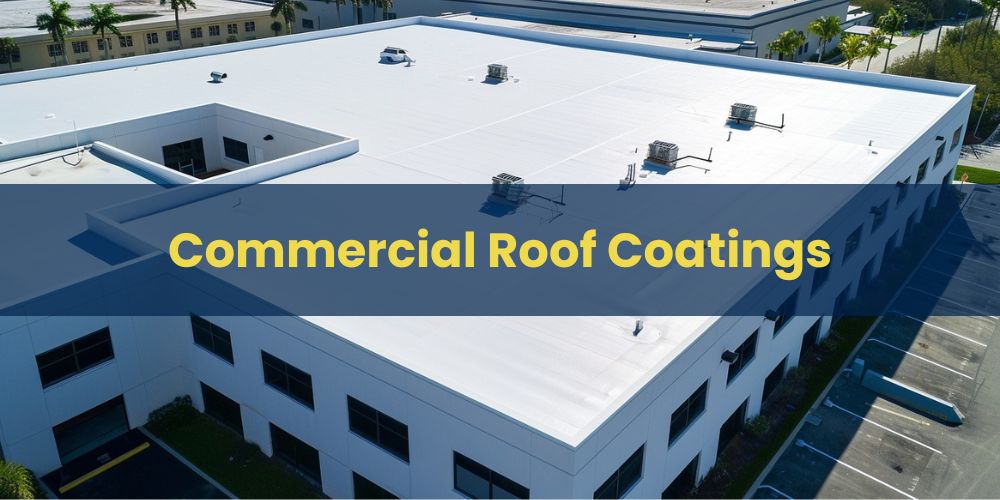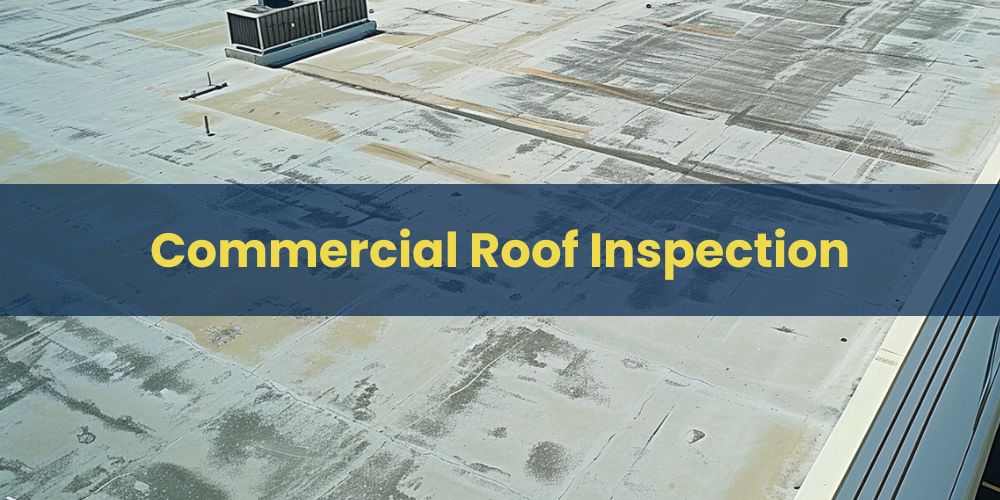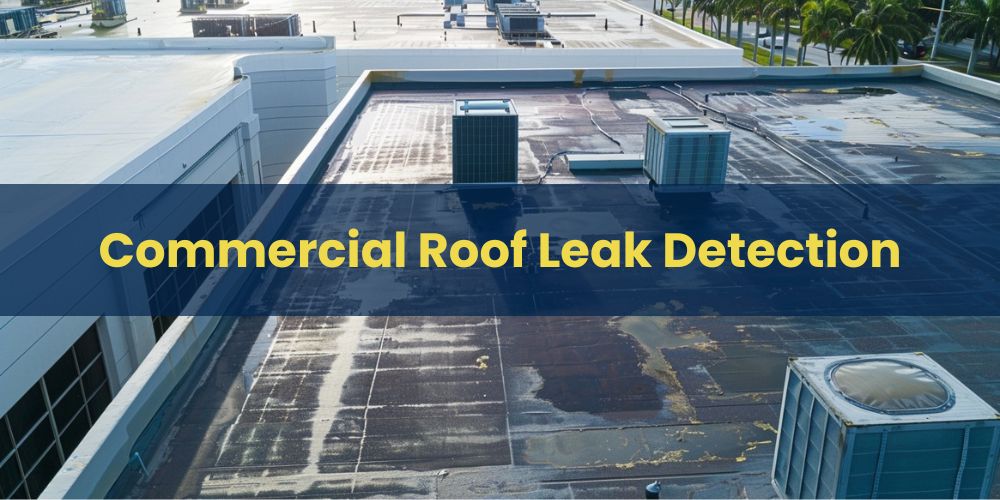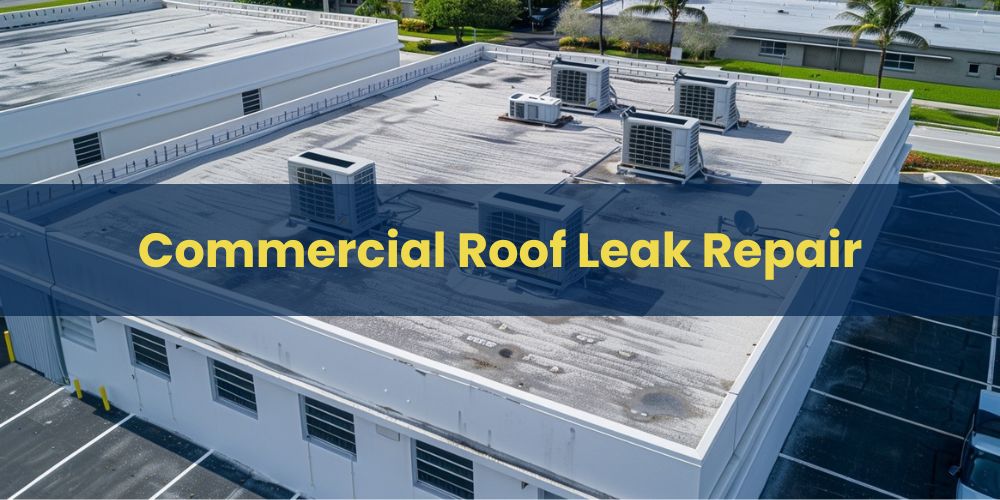
Commercial Roofing Pompano Beach: Flat & Low-Slope Roofing Contractor
Commercial Roofing Pompano Beach is a commercial roofing contractor delivering repair, replacement, and maintenance solutions for flat and low-slope roofing systems across Pompano Beach, Florida, and the surrounding Broward County area. Commercial Roofing Pompano Beach supports warehouses, logistics properties, retail centres, office buildings, hospitality buildings, industrial facilities, and multi-tenant commercial assets where roofing performance directly determines resistance to water ingress, coastal moisture exposure, wind-driven rain, and storm-related system failure. Commercial roofing systems in Pompano Beach operate under persistent coastal humidity, frequent heavy rainfall, salt-laden air, intense UV exposure, and Atlantic storm conditions. These conditions place continuous stress on roofing assemblies, where moisture accumulation, drainage dependency, wind uplift, corrosion risk, and edge-zone pressure act together to weaken seams, degrade membranes, displace flashing, corrode metal components, and compromise attachment points across TPO, PVC, EPDM, metal, and modified bitumen roofing systems.
- High coastal humidity in Pompano Beach → increases moisture loading within insulation, cover boards, and substrate layers → trapped moisture reduces thermal performance and accelerates hidden deterioration → concealed saturation can spread beneath the membrane before interior leaks become visible.
- Heavy rainfall and low-slope drainage dependence → increase the risk of ponding water, blocked drains, and overloaded scuppers → standing water places sustained pressure on seams, laps, penetrations, and flashing transitions → leak pathways develop at vulnerable junctions and progressively expand across the roof assembly.
- Atlantic coastal wind exposure and storm-driven rain → apply uplift forces to membranes, panels, perimeter edges, and fastening systems → movement at seams, terminations, curbs, skylights, and penetrations weakens roof continuity → flashing displacement, fastener fatigue, and membrane separation increase the risk of rapid water ingress during severe weather.
- Salt-laden coastal air and persistent moisture exposure → accelerate corrosion on exposed metal panels, fasteners, coping, counterflashing, gutters, and edge details → corrosion weakens attachment strength and reduces weatherproofing integrity → perimeter failure, panel movement, and flashing breakdown become more likely under wind and rain loading.
Commercial Roofing Pompano Beach focuses on resolving these interconnected failure mechanisms at system level, including moisture ingress, drainage inefficiency, ponding water, seam fatigue, flashing displacement, edge-zone vulnerability, fastener corrosion, and storm-related membrane movement. From targeted leak detection and commercial roof repair through to full roof replacement, preventative maintenance, coating systems, and lifecycle planning, each project is structured to control water movement, preserve attachment strength, maintain drainage performance, and protect the roof assembly against coastal weather exposure. Commercial Roofing Pompano Beach exists to protect commercial buildings by managing moisture, reinforcing vulnerable roof transitions, improving drainage reliability, and ensuring roofing systems function as complete assemblies under sustained environmental stress across Pompano Beach and the surrounding South Florida market.
Which Commercial Roof Systems Does Commercial Roofing Pompano Beach Service Across Coastal Broward County?
Commercial Roofing Pompano Beach services flat, low-slope, and metal commercial roof assemblies across Pompano Beach and the surrounding Broward County area. Roofs on warehouses, retail plazas, marine-service buildings, office properties, light-industrial units, hospitality buildings, storage facilities, and multi-tenant commercial assets must perform under a coastal exposure profile shaped by Atlantic moisture, salt-laden air, heavy seasonal rainfall, rooftop mechanical loads, and storm-season wind pressure. Commercial buildings near Atlantic Boulevard, Federal Highway, Dixie Highway, Copans Road, Sample Road, Powerline Road, the I-95 corridor, Pompano Beach Airpark, and the city’s commercial and industrial districts depend on roofing systems that can control water movement, protect roof edges, resist corrosion, maintain seam continuity, and prevent concealed moisture migration below the visible membrane surface.
Commercial Roofing Pompano Beach evaluates each roof type by material behaviour, attachment method, drainage performance, coastal exposure risk, and the failure mechanisms most likely to affect that assembly:
- TPO is assessed for heat-welded seam integrity, membrane attachment, insulation stability, drain-zone performance, rooftop equipment detailing, perimeter securement, and movement under ponding water or coastal wind pressure.
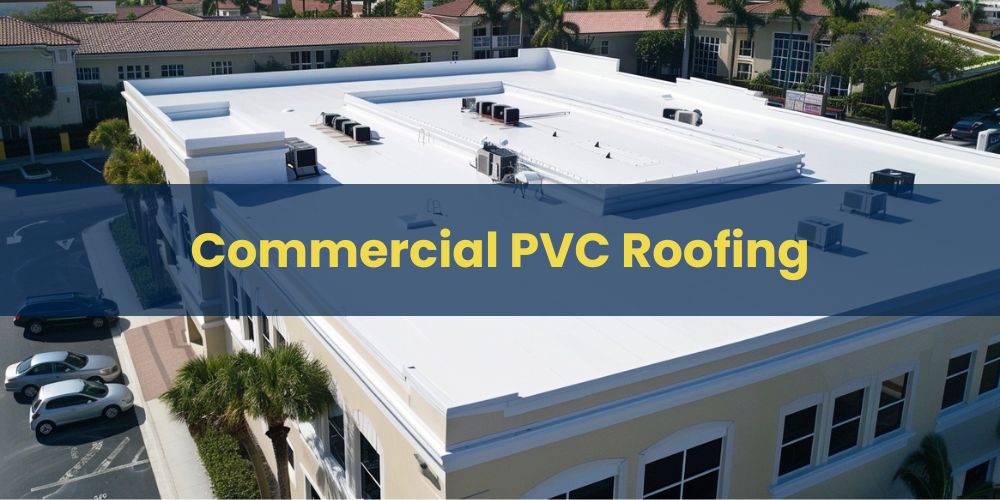
- PVC is assessed for weld quality, chemical resistance, grease exposure, membrane compatibility, rooftop exhaust impact, flashing continuity, and vulnerability to pressure-driven rain at seams, penetrations, and roof-to-wall transitions.
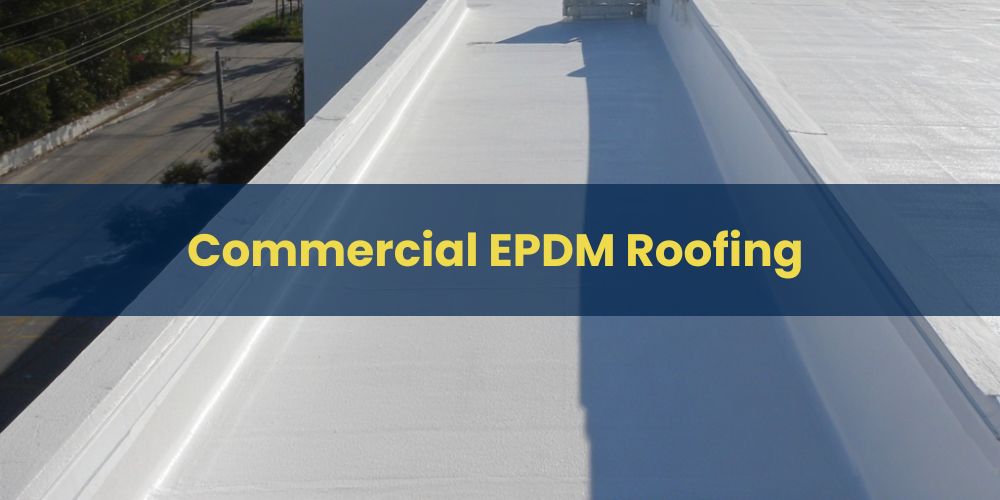
- EPDM is assessed for seam tape condition, adhesive bond strength, membrane relaxation, flashing adhesion, termination stability, roof-edge restraint, and humidity-related bond deterioration.
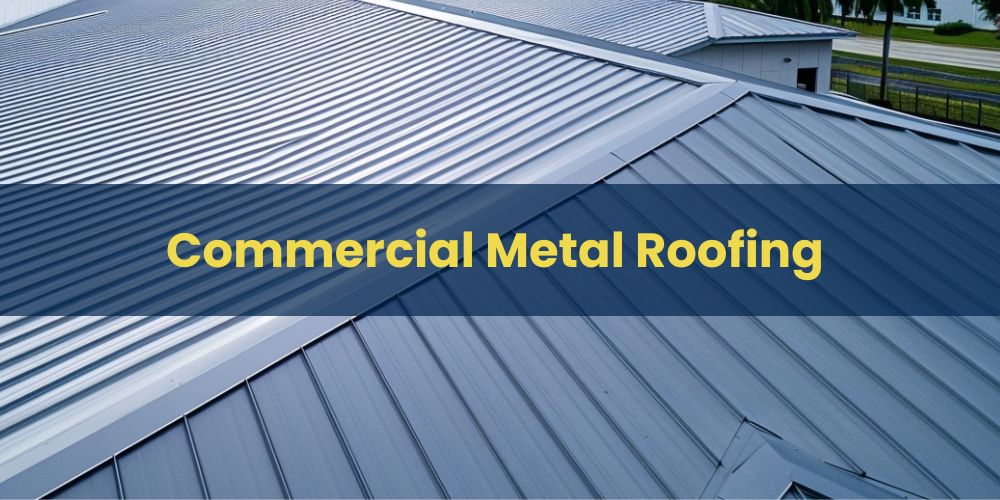
- Metal roofing is assessed for panel lap condition, fastener integrity, washer degradation, exposed metal edges, coating breakdown, gutter function, flashing transitions, corrosion spread, and wind-driven rain entry points.
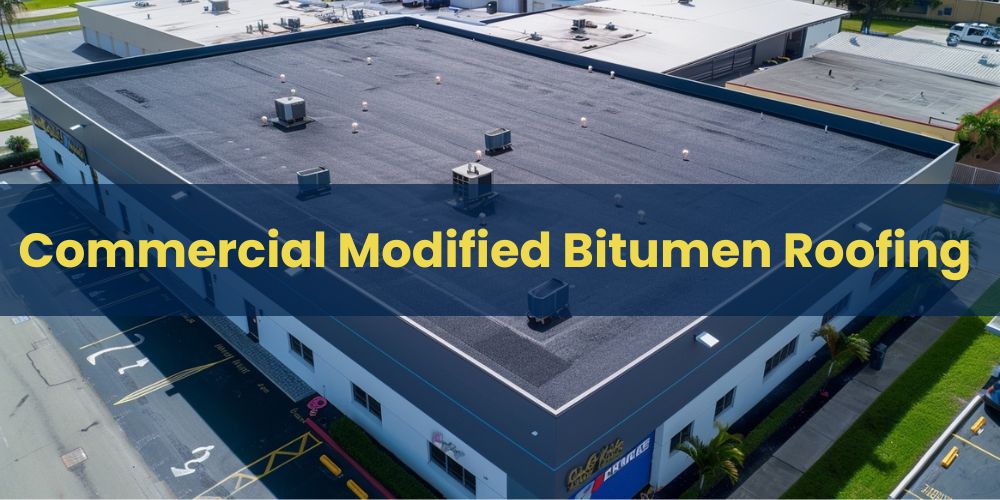
- Modified bitumen is assessed for ply adhesion, lap security, surfacing wear, blistering, moisture entrapment, flashing integration, drainage slope, and ponding resistance across asphalt-based roof assemblies.
This material-specific approach allows Commercial Roofing Pompano Beach to separate visible roof symptoms from the underlying cause of failure. A ceiling stain may originate from a drain bowl, a failed lap, a displaced flashing, a fatigued fastener, a saturated insulation zone, a deteriorated curb detail, or uplift movement at the roof perimeter. By tracing each issue back to the assembly component responsible for water entry or system instability, Commercial Roofing Pompano Beach can determine whether the roof requires targeted repair, moisture investigation, drainage correction, coating, restoration, partial replacement, or full replacement.
1. TPO: Welded Membrane Performance Under Rain Load and Coastal Wind Pressure
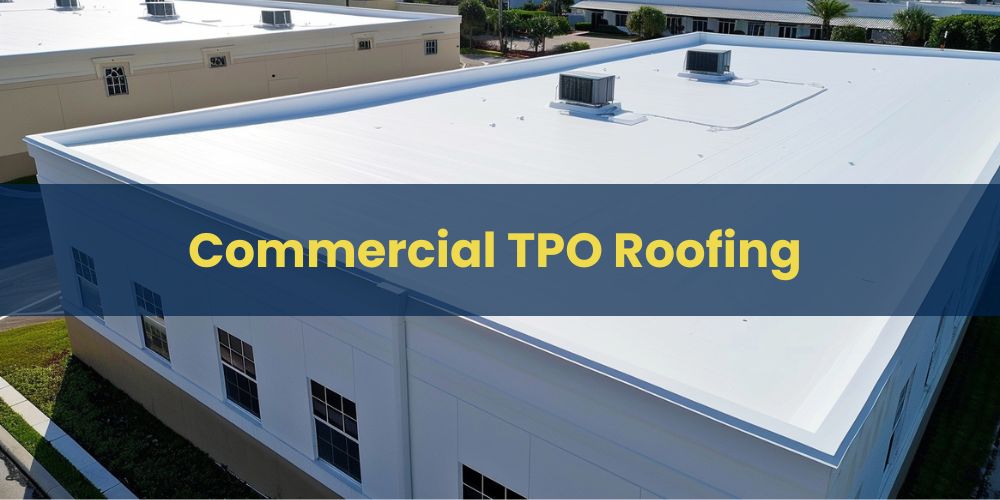
TPO commercial roofing in Pompano Beach is used across broad low-slope commercial roofs where reflective membrane performance, heat-welded seams, stable insulation, and secure perimeter detailing are essential. TPO can perform well on warehouses, retail centres, office buildings, and light-industrial properties when the roof has adequate slope, reliable drainage, compatible flashing, and strong attachment around rooftop equipment and exposed edges. In Pompano Beach, the main TPO performance risks come from sudden rainfall accumulation, ponding water, rooftop-unit concentration, UV exposure, and storm winds pulling against membrane edges and mechanically attached sheets.
- Rain-load pathway: Heavy coastal rainfall collects at low points, drain bowls, scuppers, depressed insulation areas, equipment platforms, and prior repair zones. When water remains on the membrane, the load concentrates around heat-welded seams, patches, penetrations, and roof drains. Commercial Roofing Pompano Beach addresses this through drainage review, seam probing, wet-area investigation, compatible TPO patching, drain-detail correction, and reinforcement where ponding has started to fatigue the membrane surface.
- Wind-uplift pathway: Atlantic storm winds pull against edge metal, parapet terminations, fastening plates, membrane sheets, and roof-to-wall transitions. Once perimeter movement begins, membrane flutter can transfer stress inward across seams, laps, and attachment points. Commercial Roofing Pompano Beach evaluates edge securement, fastening density, coping stability, terminations, and membrane attachment so local edge weakness does not develop into peel-back, wind-driven rain entry, or large-area roof displacement.
- Equipment-interface pathway: Rooftop HVAC units, service curbs, pipe penetrations, conduit supports, and equipment platforms interrupt the membrane field and create repeated flashing stress points. Movement, service traffic, and standing water around these details can weaken patches, curb flashing, and weld-adjacent areas. Commercial Roofing Pompano Beach reviews equipment interfaces, corrects curb details, reinforces vulnerable transitions, and restores membrane continuity around service penetrations before isolated defects become recurring leak sources.
2. PVC: Chemical Resistance, Weld Continuity, and Contaminated Rooftop Runoff
PVC commercial roofing in Pompano Beach is suited to commercial roofs where weldability, chemical resistance, and moisture control are important. Restaurants, retail plazas, food-service tenants, mixed-use commercial buildings, and properties with rooftop exhaust discharge often require roofing materials that can tolerate grease, oils, cleaning agents, condensate, and contaminated runoff better than less chemically resistant assemblies. In coastal Broward County, PVC performance depends on clean welds, compatible detailing, controlled rooftop contamination, reliable drainage, and properly integrated flashing at curbs, drains, penetrations, and wall transitions.
- Contamination pathway: Grease discharge, exhaust residue, oils, chemical runoff, service traffic, and humid debris accumulation can reduce membrane reliability around rooftop fans, exhaust outlets, drains, walk paths, and equipment zones. Contaminated weld areas may look minor while losing long-term waterproofing value. Commercial Roofing Pompano Beach inspects PVC surfaces, probes suspect seams, cleans affected areas, reinforces compatible sections, and replaces chemically stressed membrane where contamination has compromised performance.
- Pressure-rain pathway: Wind-driven rain can move laterally across low-slope PVC roofs and force water toward T-joints, flashing pockets, open laps, curb corners, pipe penetrations, drain bowls, and roof-to-wall transitions. Small weld inconsistencies become more serious when water is driven under pressure rather than falling vertically. Commercial Roofing Pompano Beach uses seam testing, hot-air welding, flashing reconstruction, drain detailing, and compatible PVC repair methods to prevent minor seam defects from becoming concealed moisture pathways.
- Compatibility pathway: PVC roof repairs require compatible materials, clean surfaces, and correct welding conditions. Incompatible patches, contaminated laps, aged flashing, or poorly prepared repair zones can create weak interfaces that fail during heavy rainfall or storm movement. Commercial Roofing Pompano Beach reviews prior repairs, checks membrane compatibility, corrects unsuitable patching, and restores weldable PVC continuity where previous work has introduced vulnerability into the roof assembly.
3. EPDM: Adhesive Bond Reliability in Humid Low-Slope Conditions
EPDM commercial roofing in Pompano Beach relies on synthetic rubber membrane performance, seam tapes, adhesives, flashing bonds, termination details, and stable substrate conditions. EPDM can be effective on low-slope commercial roofs when seams remain bonded, edges stay restrained, drainage is controlled, and flashing adhesion is preserved around penetrations, curbs, parapets, and rooftop equipment. In Pompano Beach, the main EPDM risk is not only surface weathering but the gradual weakening of adhesive relationships caused by humidity, heat cycling, moisture exposure, and repeated storm movement.
- Bond-degradation pathway: Humid air, warm roof surfaces, and daily expansion cycles place stress on seam tape, lap adhesives, flashing adhesives, termination bars, and older repair areas. When adhesion declines, water can migrate laterally below the membrane instead of appearing directly beneath the entry point. Commercial Roofing Pompano Beach checks seams, laps, drains, parapet bases, curbs, and mechanical-unit interfaces before carrying out re-bonding, seam re-taping, compatible EPDM patching, flashing correction, or substrate review.
- Membrane-displacement pathway: Wide commercial roof fields can experience uplift, billowing, and edge pull-back during storm events. Movement at corners, parapets, edge metal, and wall transitions weakens the continuous waterproofing plane. Commercial Roofing Pompano Beach reinforces terminations, corrects unstable edges, repairs flashing displacement, and replaces affected membrane areas where wind movement has damaged EPDM continuity.
- Hidden-moisture pathway: EPDM seam separation can allow water to travel below the membrane across insulation, cover boards, or deck surfaces before interior evidence appears. This makes leak tracing more difficult on large commercial buildings with wide roof spans and multiple rooftop details. Commercial Roofing Pompano Beach investigates moisture migration patterns, checks vulnerable seam lines, identifies saturated areas, and determines whether repair, partial replacement, or wider assembly correction is required.
4. Metal Roofing: Corrosion, Fastener Fatigue, and Wind-Driven Rain Entry
Commercial metal roofing in Pompano Beach depends on panel alignment, fastener condition, washer flexibility, lap sealing, protective coatings, flashing transitions, gutter performance, and corrosion control. Metal roof issues often begin at small exposed components before becoming wider water-entry problems. Warehouses, industrial buildings, storage properties, marine-service facilities, and commercial buildings with exposed roof panels are especially vulnerable where salt-laden air, humid conditions, thermal movement, and wind-driven rain act on fasteners, panel laps, cut edges, gutters, and roof-mounted equipment interfaces.
- Salt-air corrosion pathway: Coastal air accelerates deterioration around fasteners, cut edges, panel laps, gutters, ridge details, coping, exposed flashing, and mechanical equipment supports. Corrosion weakens attachment, breaks down coatings, hardens washers, and creates small water-entry points across the roof. Commercial Roofing Pompano Beach treats corrosion, replaces failed fasteners, renews washers, repairs coatings, seals panel laps, and restores viable metal roofs before isolated oxidation becomes widespread roof failure.
- Fastener-fatigue pathway: Repeated expansion, contraction, vibration, service traffic, and wind movement can loosen fasteners and reduce washer compression. Once fasteners lose sealing pressure, rain can enter through screw penetrations even when panels appear intact. Commercial Roofing Pompano Beach checks fastener rows, replaces backed-out or corroded screws, renews washers, seals compromised penetrations, and reviews whether the fastening pattern remains adequate for the building’s exposure conditions.
- Wind-driven rain pathway: During storm events, water can be forced under panel laps, behind counterflashing, through deteriorated screw holes, around failed sealant lines, and into equipment penetrations. These leaks may not appear during ordinary rainfall but become active under pressure. Commercial Roofing Pompano Beach corrects panel-lap defects, reinforces penetrations, repairs flashing transitions, reviews gutter discharge, and applies compatible metal-roof sealing or coating where the system remains suitable for restoration.
5. Modified Bitumen: Moisture Entrapment, Blistering, and Ponding Deterioration
Modified bitumen commercial roofing in Pompano Beach is an asphalt-based multi-ply roof assembly where performance depends on ply bonding, lap integrity, surfacing condition, flashing detail, drainage slope, and moisture control. Modified bitumen roofs can provide durable waterproofing on low-slope commercial buildings when seams remain secure, surfacing is intact, flashing details are maintained, and water does not remain trapped within the assembly. In Pompano Beach, heat, humidity, heavy rainfall, and drainage restrictions can combine to create blistering, delamination, lap stress, saturated roof layers, and progressive system deterioration.
- Trapped-moisture pathway: Moisture entering between plies, insulation layers, cover boards, or deck surfaces can remain hidden because the assembly limits evaporation. Heat then increases vapor pressure and produces blisters, ridges, wrinkles, splits, and delaminated sections. Commercial Roofing Pompano Beach investigates saturation, opens affected areas where appropriate, removes damaged material, reinforces exposed defects, and reinstates compatible modified bitumen layers to stop internal pressure from spreading failure across the roof.
- Ponding-deterioration pathway: Restricted drainage leaves standing water at laps, valleys, drain pockets, depressed membrane areas, flashing bases, and previous repair zones. Prolonged water contact weakens asphaltic surfaces and accelerates seam deterioration. Commercial Roofing Pompano Beach corrects drainage issues, reinforces laps, repairs surfacing, reviews flashing conditions, investigates wet layers, and determines whether restoration or replacement is the more reliable long-term outcome.
- Flashing-stress pathway: Modified bitumen roofs often fail where membrane layers meet parapets, curbs, drains, roof edges, wall transitions, and rooftop equipment. Heat movement, moisture pressure, and repeated rainfall can stress these vertical and horizontal transitions until laps open or flashing separates. Commercial Roofing Pompano Beach reviews flashing adhesion, lap condition, reinforcement requirements, termination stability, and substrate condition before selecting repair, restoration, or replacement work.
Commercial Roofing Pompano Beach aligns repair, maintenance, restoration, coating, partial replacement, and full replacement recommendations with the specific behaviour of each roof type under Pompano Beach’s coastal humidity, Atlantic wind exposure, salt-air corrosion risk, heavy rainfall, drainage dependence, rooftop equipment concentration, chemical contamination, and storm-season uplift. By separating roof-system failure mechanisms from generic surface symptoms, Commercial Roofing Pompano Beach helps commercial property owners protect buildings, tenants, stock, equipment, and daily operations with roofing work that matches the real condition of the assembly rather than relying on short-term patching alone.
Have a question about a commercial roofing project?
How Does Commercial Roofing Pompano Beach Control Roofing Projects Under Coastal Weather Exposure?
Commercial Roofing Pompano Beach controls commercial roofing projects by managing the full project lifecycle across inspection, diagnosis, scope selection, exposure control, system-specific execution, dry-in, verification, and maintenance planning. In Pompano Beach and the surrounding Broward County area, commercial roofs are exposed to Atlantic moisture, salt-laden air, heavy rainfall, edge-zone wind uplift, rooftop equipment congestion, and drainage pressure across flat, low-slope, and metal roof assemblies. Warehouses near the I-95 corridor, retail and restaurant roofs along Atlantic Boulevard and Federal Highway, light-industrial buildings around Copans Road and Powerline Road, commercial properties near Dixie Highway, marine-service facilities, storage buildings, office properties, hospitality buildings, and multi-tenant assets close to Intracoastal-influenced zones all require roofing work to be sequenced around water movement, corrosion risk, operational continuity, and storm-season exposure.
Commercial Roofing Pompano Beach does not treat project control as a final checklist. It is built into every stage of commercial roofing work so moisture is found before it is enclosed, drainage faults are corrected before new materials are stressed, coastal corrosion is addressed before securement weakens, and vulnerable roof edges are stabilised before wind pressure turns local movement into system failure.
1. Coastal Moisture Review and Pre-Work Risk Isolation
Pre-work control begins by separating visible roof symptoms from hidden moisture behaviour inside the assembly. In Pompano Beach, where humid air, recurring rainfall, and warm roof surfaces can keep moisture active below membranes and insulation layers, Commercial Roofing Pompano Beach verifies whether a roof is dry enough to repair, restore, coat, or replace before work is started.
- Moisture scanning across membranes, insulation, cover boards, and roof decks → distinguishes dry repairable areas from saturated zones that require removal, drying, or wider investigation → supports accurate scope selection before cutting, patching, coating, overlay, or replacement begins → if wet material is enclosed beneath new work, trapped moisture continues to migrate through the assembly and can cause repeat leaks, blistering, insulation decay, adhesive failure, or premature roof-system breakdown.
- Rooftop equipment, curb, vent, conduit, skylight, pipe penetration, and service-line inspection → exposes leak-prone interfaces where water often bypasses the main membrane field → prioritises the details most likely to affect active commercial interiors, tenant spaces, electrical rooms, storage areas, and operational zones → if these interfaces are treated after general membrane work, water can continue entering through equipment clusters, flashing pockets, curb corners, deteriorated sealant lines, or displaced penetration details.
- Interior leak-path correlation with exterior roof conditions → connects ceiling stains, warehouse drip points, tenant reports, wet insulation readings, damaged ceiling tiles, inventory exposure, and electrical-risk areas to likely roof-entry locations → prevents repair planning from relying only on visible surface defects → if interior evidence is not tied back to exterior roof features, crews may repair secondary symptoms while the active source remains open above the building.
2. Drainage Control Across Flat and Low-Slope Commercial Roofs
Drainage control determines whether completed roofing work can survive Pompano Beach rainfall without being exposed to the same water load that caused the original failure. Commercial Roofing Pompano Beach reviews the roof as a water-management surface, tracing how rainfall moves from high points to drains, scuppers, gutters, downspouts, overflow routes, equipment clusters, and low-slope depressions.
- Drain, scupper, gutter, downspout, collector box, and overflow-path review → verifies whether the roof can release sudden South Florida rainfall before water backs up across seams, laps, flashing bases, drain bowls, or membrane transitions → protects repaired or replaced areas from sustained hydrostatic pressure → if discharge capacity remains restricted, ponding water can reform immediately after the project and reopen stress points at the weakest junctions.
- Low-point mapping across warehouse, retail, restaurant, office, storage, and light-industrial roofs → locates depressed insulation, deflected deck areas, blocked flow lines, poorly sloped zones, and recurring ponding pockets → determines whether the project needs drainage correction, tapered insulation review, reinforced repair, coating preparation, partial replacement, or wider reconstruction → if low points are ignored, the roof continues concentrating water in the same failure zones regardless of how clean the visible repair appears.
- Water-flow control around HVAC stands, pipe supports, conduit runs, service platforms, exhaust units, and equipment curbs → removes obstructions that interrupt roof-plane drainage and trap water around penetrations → reduces localised leakage around details that receive repeated service traffic and vibration → if rooftop equipment areas are not incorporated into drainage planning, each rain event can create collection basins around the very details most likely to leak.
3. Salt-Air Corrosion and Exposed Metal Component Control
In Pompano Beach, corrosion control is part of roof performance rather than cosmetic upkeep. Salt-laden air, humid conditions, windborne contaminants, and storm moisture can degrade fasteners, washers, edge metal, coping, gutters, panel laps, exposed flashings, and equipment supports long before the main roof field appears to have failed.
- Fastener, washer, coping, edge-metal, gutter, panel-lap, counterflashing, and equipment-support assessment → reveals where corrosion has reduced holding strength, weatherproofing compression, or metal continuity → determines whether components should be cleaned, treated, sealed, replaced, coated, or excluded from restoration scope → if weakened metal details are covered without correction, the roof may look improved while water-entry points and attachment weaknesses continue expanding under wind-driven rain.
- Cut-edge, exposed-panel, lap-joint, ridge, valley, and transition-metal review on commercial metal roofing → separates surface oxidation from active deterioration, coating failure, panel instability, and lap vulnerability → determines whether metal roof restoration is viable or whether replacement is the more reliable long-term option → if cut-edge corrosion and lap breakdown are misclassified, coating or sealant work can conceal active failure instead of restoring waterproofing and securement.
- Coastal exposure prioritisation for buildings near marine-service zones, Intracoastal-influenced corridors, commercial yards, storage properties, and open wind corridors → assigns higher inspection priority to metal details most exposed to humid air, salt particles, and windborne debris → preserves attachment strength at the roof components most likely to fail under storm pressure → if corrosion is treated as a low-priority visual issue, minor oxidation can progress into fastener failure, flashing movement, panel displacement, or recurring leak entry.
4. Wind-Uplift, Edge-Zone, and Storm-Season Securement
Wind-related project control focuses on the areas where commercial roof failure usually begins: corners, perimeters, parapets, edge metal, coping, terminations, fasteners, membrane laps, panel seams, and unfinished work zones. Commercial Roofing Pompano Beach treats roof edges and daily closeout points as high-risk control areas because Atlantic storm activity can turn small movement into rapid water entry or wider assembly displacement.
- Perimeter, corner, parapet, coping, edge-metal, and roof-to-wall transition verification → checks whether the highest-uplift zones can resist wind pressure before the roof is repaired, restored, coated, or replaced → protects membrane edges, metal panels, flashing systems, and termination details from progressive movement → if edge-zone weakness is left in place, wind can initiate peel-back, panel lift, flashing separation, or pressure-driven water intrusion at the roof boundary.
- Attachment review across membrane sheets, plates, termination bars, seams, fasteners, panel laps, curbs, and mechanical securement points → confirms whether the existing assembly is stable enough to receive new repair, coating, restoration, or tie-in work → prevents new materials from being connected to roof sections that are already moving under load → if attachment is not verified, completed repairs can fail because the underlying system continues shifting during wind events.
- Daily dry-in, temporary waterproofing, and end-of-shift closeout control → secures open substrates, removed flashing, exposed insulation, cut-back membrane, unfinished seams, drain work, and roof-edge transitions before crews leave the building → protects operating businesses from overnight rainfall, sudden storm cells, and wind-driven moisture → if closeout is rushed, even a short rainfall event can enter open roof sections and cause immediate interior damage before the permanent work is complete.
5. Repair, Restoration, Coating, or Replacement Scope Control
Scope control determines whether Commercial Roofing Pompano Beach is solving the actual roof failure or only covering the visible symptom. Each project is reviewed against the condition of the membrane, insulation, substrate, drainage system, flashings, fasteners, coatings, seams, and metal details so the selected scope matches the roof’s remaining serviceability.
- Defect containment review across seams, laps, punctures, flashings, drains, fasteners, curbs, and rooftop equipment interfaces → confirms whether the issue is localised, spreading, moisture-driven, corrosion-related, drainage-related, or part of a wider system decline → supports targeted repair only when the surrounding assembly remains stable → if a systemic problem is treated as an isolated defect, deterioration continues beyond the repair boundary and creates recurring leak activity.
- Moisture spread, insulation condition, deck stability, substrate adhesion, and multi-zone deterioration assessment → clarifies whether surface repair can protect the building or whether restoration, partial replacement, or full replacement is required → prevents saturated layers from being hidden beneath new materials → if wet or unstable layers are left in place, the new roof work inherits the same concealed failure conditions that damaged the original assembly.
- Coating suitability review for TPO, PVC, EPDM, metal roofing, and modified bitumen → evaluates adhesion, cleanliness, dry-film compatibility, seam stability, corrosion status, surfacing condition, moisture content, and remaining service life before coating is recommended → ensures coating is used as a performance extension, not as a cosmetic cover for active failure → if coating is applied to an unsuitable roof, water movement, blistering, seam separation, corrosion expansion, or substrate decay can continue beneath the finished surface.
6. System-Specific Execution for TPO, PVC, EPDM, Metal Roofing, and Modified Bitumen
Execution control changes by roof type because welded membranes, chemically resistant membranes, adhesive-bonded rubber membranes, panel-based metal assemblies, and asphalt-based multi-ply roofs fail through different mechanisms. Commercial Roofing Pompano Beach adjusts preparation, material compatibility, repair method, drying conditions, fastening control, and installation sequencing according to the roof system being worked on.
- TPO seam welding, patching, drain detailing, and flashing repair → require clean, dry, stable surfaces so heat-welded seams can form continuous waterproofing connections → preserves membrane performance around laps, penetrations, roof edges, and rooftop equipment → if TPO work is completed over moisture, contamination, unstable insulation, or moving edges, the repaired seam can split, lift, or leak during the next heavy rainfall or wind-uplift cycle.
- PVC repair around restaurants, retail centres, exhaust units, grease discharge, cleaning chemicals, and contaminated runoff zones → requires surface preparation, compatible materials, and proper weld conditions before reinforcement or replacement is completed → protects chemical resistance and seam reliability in high-contamination roof areas → if PVC contamination is not removed or incompatible materials are used, new welds and patches can lose performance at the exact locations most exposed to rainfall and rooftop discharge.
- EPDM bonding, seam taping, flashing correction, and termination repair → require humidity-aware preparation and substrate review so adhesives and tapes can maintain long-term bond strength → restores waterproofing continuity around laps, curbs, drains, parapets, and penetrations → if bond conditions are ignored, seam separation, membrane pull-back, and lateral water migration can return shortly after the repair is completed.
- Metal roof fastening, washer renewal, corrosion treatment, panel-lap sealing, gutter review, and flashing correction → restore both weatherproofing and attachment strength across exposed metal assemblies → reduces wind-driven rain entry through screws, laps, ridges, transitions, and equipment supports → if metal components are sealed without correcting corrosion, movement, or failed washers, water can continue entering through pressure-driven pathways even after visible gaps are covered.
- Modified bitumen cut-out, drying, ply repair, lap reinforcement, flashing reinstatement, and blister-zone correction → remove trapped moisture and restore layered integrity where heat, humidity, and vapor pressure have damaged the roof assembly → prevents isolated blistering or delamination from expanding into wider membrane breakdown → if wet or separated layers remain beneath repairs, internal pressure continues building until the finished surface splits, blisters, or deteriorates again.
7. Post-Work Verification and Maintenance Planning
Project control continues after installation or repair because Pompano Beach commercial roofs remain exposed to coastal humidity, salt air, intense rainfall, rooftop service traffic, drainage stress, and storm-season uplift. Commercial Roofing Pompano Beach verifies that corrected areas function as part of the full roof assembly, then defines maintenance priorities around the details most likely to fail under local exposure conditions.
- Final inspection across seams, drains, penetrations, flashings, roof edges, fasteners, rooftop equipment, coating transitions, gutters, repaired zones, and replacement tie-ins → confirms whether the highest-risk components have been corrected before closeout → reduces immediate post-project leak risk across occupied commercial buildings → if final verification is incomplete, small missed defects can become active during the next coastal rain event and undermine confidence in the completed work.
- Drainage performance verification through cleared outlets, flow observation, slope review, ponding-zone reassessment, and roof-plane walkdown → confirms that water exits the roof instead of collecting over repaired seams, flashing bases, laps, or drain bowls → protects new work from the same water-load conditions that caused earlier deterioration → if drainage is not verified, ponding water can reintroduce seam fatigue, flashing stress, membrane deformation, corrosion, and moisture entry.
- Maintenance planning based on Pompano Beach exposure patterns → schedules ongoing review of drains, scuppers, gutters, rooftop equipment zones, fasteners, metal edges, coatings, seams, flashings, penetrations, parapets, and roof perimeters → turns recurring coastal risk into a managed inspection cycle rather than an emergency repair pattern → if maintenance is neglected, humidity, salt air, rainfall, service traffic, and wind uplift compound small defects into major roof-system failures.
Commercial Roofing Pompano Beach controls roofing projects by connecting every stage of work to the environmental and assembly-level risks that define commercial roofing performance in coastal Broward County. Moisture is verified before it is sealed in. Drainage is corrected before water load damages new work. Corrosion is treated before metal components lose securement. Edge zones are checked before wind pressure expands local movement into system failure. Scope is selected according to actual roof condition rather than surface appearance. Each repair, restoration, coating, maintenance, partial replacement, or full replacement project is controlled so the completed roof assembly remains watertight, mechanically stable, serviceable, and capable of protecting commercial operations under Pompano Beach’s coastal weather exposure.
Have a question about a commercial roofing project?
What Types of Commercial Buildings Does Commercial Roofing Pompano Beach Support?
Commercial Roofing Pompano Beach supports commercial buildings across Pompano Beach and the surrounding Broward County area where roof performance affects water resistance, operational continuity, tenant protection, inventory safety, energy efficiency, and storm-season resilience. Different commercial property types place different demands on flat, low-slope, and metal roofing systems. A warehouse roof may be shaped by large-span drainage load and stock protection, while a restaurant roof may require stronger control around grease discharge, exhaust equipment, contaminated runoff, and membrane compatibility. Each building is evaluated by roof size, occupancy pattern, rooftop equipment density, drainage layout, exposure to coastal weather, and the commercial risk created if the roof fails.
Commercial Roofing Pompano Beach works with commercial properties where moisture control, drainage performance, corrosion resistance, attachment stability, and roof-system continuity are directly connected to the business operating beneath the roof:
- Warehouse and logistics buildings → wide-span roof areas create high drainage load and stock-protection risk → roof evaluation focuses on ponding zones, seams, drains, membrane attachment, and leak prevention over inventory, loading areas, racking systems, and operational equipment.
- Retail plazas and shopping centres → multi-tenant layouts increase the consequence of water migration across shared roof assemblies → roof evaluation focuses on parapet walls, signage zones, rooftop units, shared drainage lines, service corridors, and customer-facing interiors.
- Office buildings and professional properties → occupied workspaces and interior finish sensitivity increase the cost of minor roof leaks → roof evaluation focuses on HVAC units, drains, penetrations, ceiling systems, access sequencing, and business continuity during roofing work.
- Restaurant and food-service buildings → grease discharge, exhaust residue, condensate, and cleaning chemicals can change membrane performance → roof evaluation focuses on exhaust fans, contaminated runoff paths, membrane compatibility, drainage routes, and high-use rooftop service areas.
- Light-industrial and flex-space buildings → mixed commercial use places storage, production, office, service, and equipment zones beneath one roof assembly → roof evaluation focuses on rooftop equipment, service traffic, panel movement, fastener fatigue, low-slope drainage, and operational sensitivity below the deck.
- Marine-service and coastal commercial facilities → salt-air exposure and open wind conditions increase corrosion and uplift risk → roof evaluation focuses on exposed metal details, fasteners, gutters, coping, panel laps, edge securement, and moisture movement near Intracoastal-influenced commercial zones.
- Hospitality and accommodation buildings → guest-facing interiors increase the need for controlled access, clean sequencing, and rapid dry-in → roof evaluation focuses on occupied rooms, corridors, rooftop mechanical systems, leak containment, water-entry prevention, and disruption control.
- Storage facilities and multi-tenant commercial buildings → separated units beneath continuous roof assemblies allow water to travel before appearing inside one space → roof evaluation focuses on shared walls, access corridors, stored contents, drainage lines, roof edges, repeated transitions, and leak-path tracing.
Each building type is evaluated by the roof conditions most likely to interrupt the business operating beneath it. Commercial Roofing Pompano Beach considers water load, drainage dependency, rooftop equipment concentration, coastal corrosion exposure, tenant sensitivity, access constraints, and the financial impact of operational disruption before recommending repair, maintenance, restoration, coating, partial replacement, or full replacement.
1. Warehouse and Logistics Buildings
Warehouse and logistics roofs in Pompano Beach often involve large flat or low-slope spans where rainfall accumulation, drainage capacity, and membrane or panel attachment directly affect stock protection and operational continuity. Properties near the I-95 corridor, Copans Road, Powerline Road, and surrounding light-industrial areas require roof systems that can move water quickly, resist storm uplift, and prevent leaks over storage racks, loading zones, inventory, equipment, and active work areas.
- Large-span roof areas across warehouses and logistics buildings → collect high rainfall volume across broad membrane fields → increase pressure on drains, scuppers, seams, laps, low points, and attachment zones → Commercial Roofing Pompano Beach reviews drainage routes, ponding areas, membrane condition, and securement points → leak risk is reduced over stored goods, loading areas, equipment, and operational zones.
- Loading bays, rooftop mechanical zones, and inventory areas → concentrate roof risk around penetrations, curbs, service corridors, edge details, and equipment supports → increase the consequence of water entry below the roof deck → Commercial Roofing Pompano Beach sequences inspection, repair, dry-in, and closeout around these high-value areas → stored materials, equipment, and business operations remain better protected during active roofing work.
2. Retail Plazas and Shopping Centres
Retail plazas and shopping centres across Pompano Beach require commercial roofing systems that protect multiple tenants, shared walls, customer interiors, parapet details, signage zones, rooftop HVAC units, and service corridors. Roof issues on these properties can affect several businesses at once, especially where water travels beneath membranes, along deck lines, or through shared drainage and flashing conditions.
- Multi-tenant roof layouts over retail plazas and shopping centres → allow water to migrate beyond the original entry point → complicate leak tracing across shared roof assemblies, wall lines, and tenant spaces → Commercial Roofing Pompano Beach correlates tenant leak reports, rooftop conditions, drainage paths, and membrane defects → repair or replacement scope is tied to the actual water pathway rather than one visible interior symptom.
- Parapet walls, signage attachments, storefront transitions, and rooftop HVAC clusters → create repeated flashing, penetration, and edge-detail stress points → increase vulnerability to wind-driven rain, service traffic, and hidden water entry → Commercial Roofing Pompano Beach reviews these transitions during inspection, flashing repair, edge securement, and maintenance planning → customer-facing interiors and multiple tenant spaces remain better protected.
3. Office Buildings and Professional Properties
Office buildings and professional properties in Pompano Beach need commercial roofing work that protects occupied interiors, technology equipment, ceiling systems, tenant spaces, and daily business activity. Roof performance is especially important where low-slope assemblies support rooftop mechanical systems and where even minor water entry can damage interior finishes or interrupt operations.
- Occupied workspaces beneath office roofs → make roof leaks disruptive to staff, visitors, technology systems, interior finishes, and tenant operations → require controlled repair areas, clean sequencing, and reliable daily dry-in → Commercial Roofing Pompano Beach plans work around access routes, leak-risk zones, weather exposure, and closeout protection → disruption to office activity is reduced during repair, maintenance, or replacement.
- HVAC units, roof drains, parapets, service penetrations, and ceiling-sensitive interiors → create recurring leak sources above offices and professional suites → require detail-level inspection, moisture mapping, and post-work verification → Commercial Roofing Pompano Beach connects roof diagnostics with interior leak evidence → roofing decisions reflect actual building risk instead of surface appearance alone.
4. Restaurant and Food-Service Buildings
Restaurant and food-service roofs in Pompano Beach require additional control because rooftop exhaust, grease discharge, oils, cleaning agents, condensate, and service access can change how roofing materials perform. Commercial Roofing Pompano Beach evaluates these buildings by membrane compatibility, rooftop contamination, drainage behaviour, flashing condition, and the condition of roof areas around exhaust fans, kitchen vents, grease discharge points, and mechanical equipment.
- Grease discharge, exhaust residue, cleaning chemicals, and contaminated runoff → affect membrane surfaces, weld zones, seams, drains, and rooftop water paths → weaken roof areas around fans, curbs, service routes, and drainage points → Commercial Roofing Pompano Beach assesses chemical exposure and material compatibility before repair or reinforcement → roof work is matched to the contamination profile of the food-service building.
- Frequent rooftop service access around restaurant equipment → increases foot traffic, puncture risk, displaced accessories, and wear around exhaust fans and mechanical units → raises the likelihood of membrane damage near high-use zones → Commercial Roofing Pompano Beach reviews walkway needs, equipment interfaces, curb flashing, repair history, and drainage control → maintenance and repair planning protects the roof areas most exposed to service-related damage.
5. Light-Industrial and Flex-Space Buildings
Light-industrial and flex-space buildings across Pompano Beach often combine warehouse storage, production areas, offices, service bays, and rooftop mechanical equipment within the same property. These roofs require evaluation across multiple risk zones because water entry can affect inventory, machinery, office areas, electrical systems, and tenant operations at the same time.
- Mixed-use commercial interiors beneath one roof assembly → place offices, storage areas, equipment zones, production areas, and service bays under different operational risk levels → require roof defects to be mapped against how the building is used → Commercial Roofing Pompano Beach prioritises repair or replacement scope around the highest-risk zones → roof work supports both building protection and business continuity.
- Metal panels, low-slope membranes, fasteners, curbs, equipment supports, and drainage lines → create multiple possible failure points across flex-space roofs → require system-specific inspection rather than generic leak repair → Commercial Roofing Pompano Beach reviews attachment, drainage, flashing, membrane condition, and corrosion exposure → the selected roofing solution matches the actual assembly and exposure conditions.
6. Marine-Service and Coastal Commercial Facilities
Marine-service and coastal commercial facilities in Pompano Beach face stronger exposure to salt-laden air, humid conditions, wind-driven rain, exposed metal details, and corrosion-prone roof components. Buildings near Intracoastal-influenced corridors, open commercial yards, boat-service areas, and coastal trade locations require roofing systems that protect both waterproofing performance and metal securement.
- Salt-air exposure near marine-service and coastal commercial zones → accelerates corrosion at fasteners, gutters, coping, edge metal, flashing, panel laps, and equipment supports → weakens both weatherproofing and attachment strength → Commercial Roofing Pompano Beach inspects exposed metal components before recommending coating, repair, restoration, or replacement → corrosion-related roof failure is addressed before it becomes a storm-season vulnerability.
- Open-yard and coastal wind exposure → increases uplift pressure around roof edges, panels, parapets, coping, and terminations → can turn minor movement into wider roof instability → Commercial Roofing Pompano Beach reviews perimeter securement, fastening condition, flashing continuity, and storm-readiness → roof assemblies remain better prepared for wind-driven rain and coastal storm pressure.
7. Hospitality and Accommodation Buildings
Hospitality and accommodation buildings in Pompano Beach require commercial roofing work that protects occupied interiors while limiting disruption to guests, staff, access routes, rooftop mechanical systems, and public-facing areas. Roofing issues on these buildings can affect guest rooms, corridors, lobbies, kitchens, laundry areas, service zones, and mechanical spaces.
- Guest-facing interiors beneath hospitality roofs → increase the consequence of visible leaks, ceiling damage, odour, moisture staining, and active work disruption → require dry-in control, clean sequencing, and rapid leak containment → Commercial Roofing Pompano Beach plans roof activity around occupancy, access needs, and weather exposure → guest areas and active operations remain better protected during roofing work.
- Rooftop mechanical systems serving guest rooms and public areas → create penetrations, curbs, condensate lines, and service walk zones → increase leak risk around equipment interfaces → Commercial Roofing Pompano Beach reviews flashing, drains, curb details, membrane continuity, and maintenance needs → roof performance is protected around the equipment zones most critical to building operations.
8. Storage Facilities and Multi-Tenant Commercial Buildings
Storage facilities and multi-tenant commercial buildings in Pompano Beach rely on roof systems that protect separated units, shared walls, tenant contents, access corridors, drainage lines, roof edges, and repeated transitions across large building footprints. Because leaks can travel laterally before appearing inside one unit, roof evaluation must account for shared roof behaviour rather than isolated interior symptoms.
- Separated units beneath a continuous roof assembly → allow water to travel before becoming visible inside a specific tenant space → require leak tracing across seams, laps, drains, wall lines, and roof slopes → Commercial Roofing Pompano Beach evaluates roof-wide moisture movement before assigning repair scope to one visible leak location → tenant contents and shared commercial areas receive better protection from recurring water entry.
- Large roof footprints with repeated transitions → increase the number of roof edges, penetrations, drainage points, flashing details, and leak-prone interfaces → create multiple opportunities for water entry under rainfall or wind pressure → Commercial Roofing Pompano Beach reviews the full assembly instead of relying on isolated patching → adjacent vulnerabilities are addressed before they become separate leak events.
Commercial Roofing Pompano Beach supports these building types by matching roof-system decisions to the commercial use of the property, the exposure conditions around the site, and the operational consequences of roof failure. Whether the building is a warehouse near the I-95 corridor, a retail plaza along Federal Highway, a restaurant near Atlantic Boulevard, a light-industrial unit around Powerline Road or Copans Road, a marine-service facility near Intracoastal-influenced areas, or a multi-tenant commercial property elsewhere in Pompano Beach, the roofing approach is built around water control, attachment stability, corrosion resistance, drainage performance, and long-term protection for the business operating beneath the roof.
Have a question about a commercial roofing project?
How Does Commercial Roofing Pompano Beach Decide Whether a Roof Needs Repair, Restoration, or Replacement?
Commercial Roofing Pompano Beach decides between roof repair, roof restoration, coating, partial replacement, and full roof replacement by evaluating the actual condition of the roof assembly rather than the visible symptom alone. A commercial roof in Pompano Beach may show a ceiling stain, ponding area, open seam, corroded fastener, blistered membrane, displaced flashing, or recurring leak, but the correct scope depends on whether the issue is isolated, moisture-driven, drainage-related, corrosion-related, storm-related, or part of wider system deterioration. The decision process considers membrane condition, insulation saturation, attachment strength, drainage performance, roof age, previous repair history, flashing continuity, rooftop equipment exposure, coastal corrosion risk, and the operational consequence of failure inside the building.
This decision process is especially important for commercial roofs near Atlantic Boulevard, Federal Highway, Dixie Highway, Copans Road, Sample Road, Powerline Road, the I-95 corridor, Pompano Beach Airpark, marine-service zones, storage yards, retail corridors, restaurant-heavy commercial areas, light-industrial districts, and Intracoastal-influenced properties where rainfall intensity, salt-laden air, rooftop equipment density, low-slope drainage pressure, and wind-driven rain create different roof failure patterns.
Commercial Roofing Pompano Beach uses repair, restoration, coating, partial replacement, and full replacement as different responses to different roof conditions:
- Targeted roof repair → used when the failure is isolated, traceable, and surrounded by stable roof material → suitable for localised seam defects, punctures, flashing gaps, drain issues, small membrane splits, fastener leaks, or equipment-curb failures → preserves serviceable roof areas while correcting the defined failure point.
- Commercial roof restoration → used when the roof is still structurally serviceable but needs wider correction to extend performance → suitable for ageing membranes, surface wear, recurring minor defects, coating preparation, seam reinforcement, and controlled drainage improvements → improves roof performance without defaulting to premature tear-off.
- Commercial roof coating → used when the roof is dry, clean, compatible, and stable enough to accept a fluid-applied protective system → suitable for viable TPO, PVC, EPDM, metal, or modified bitumen roofs where moisture, adhesion, and substrate conditions support coating performance → adds protection only where coating will not trap moisture or conceal active failure.
- Partial roof replacement → used when damage is concentrated in one roof section, wet zone, drainage area, equipment cluster, or failed perimeter condition → suitable when the remaining roof assembly is still serviceable and can be tied into correctly → removes the compromised area while preserving viable roof sections.
- Full roof replacement → used when the roof has widespread saturation, attachment failure, repeated leaks, end-of-life material deterioration, systemic seam failure, severe corrosion, major ponding, or storm damage that cannot be reliably corrected with repair or restoration → rebuilds waterproofing, attachment, drainage, and roof-system continuity at assembly level.
Each decision is based on whether the proposed scope will control water movement, preserve attachment strength, maintain drainage performance, and protect the commercial use of the building under Pompano Beach’s coastal humidity, heavy rainfall, salt-air exposure, UV load, rooftop equipment concentration, and storm-season wind pressure.
1. When Is Targeted Commercial Roof Repair the Correct Scope?
Commercial roof repair is selected when the defect is localised and the surrounding roof assembly remains stable, dry, and serviceable. In Pompano Beach, this often applies to isolated seam openings, punctures, flashing defects, fastener leaks, drain-area failures, small membrane splits, or rooftop equipment interfaces where water entry can be traced to a defined component rather than a failing roof system.
- Isolated seam, puncture, flashing gap, or drain defect → confirms that water entry is tied to a specific failure point → Commercial Roofing Pompano Beach repairs the affected membrane, seam, flashing, fastener, or drainage detail → the roof remains serviceable without unnecessary replacement of stable surrounding areas.
- Leak source surrounded by dry insulation and stable substrate → rules out wider saturation at the immediate failure area → Commercial Roofing Pompano Beach performs targeted repair with compatible materials and closeout verification → the building is protected while avoiding wider scope than the roof condition requires.
- Rooftop equipment curb, pipe penetration, vent, or service-line leak → shows that the failure is concentrated around a roof interruption rather than the main membrane field → Commercial Roofing Pompano Beach corrects flashing, sealant, curb integration, or membrane transition details → recurring water entry is controlled at the interface where the leak began.
2. When Is Commercial Roof Restoration the Better Option?
Commercial roof restoration is considered when the roof is not new, but it still has enough underlying stability to justify extending service life. Restoration is not selected because a roof looks aged; it is selected when moisture levels, attachment condition, membrane integrity, drainage behaviour, and substrate stability show that the assembly can still be reinforced, sealed, corrected, and protected without full replacement.
- Ageing but serviceable membrane or metal roof → reveals surface wear, seam fatigue, minor defects, or coating breakdown without widespread saturation → Commercial Roofing Pompano Beach reinforces seams, corrects details, treats vulnerable areas, and prepares the roof for restoration → service life is extended without removing roof sections that remain viable.
- Recurring minor leaks across predictable detail areas → separate a pattern of performance decline from one isolated defect → Commercial Roofing Pompano Beach reviews seams, flashings, penetrations, drains, and roof edges as a connected system → restoration addresses the failure pattern instead of chasing individual leaks.
- Stable attachment, acceptable substrate condition, and controllable drainage → support repair-plus-restoration instead of tear-off → Commercial Roofing Pompano Beach uses reinforcement, compatible materials, drainage improvement, and protective surface treatment where appropriate → the building receives a more durable outcome than short-term patching.
3. When Is Commercial Roof Coating Suitable?
Commercial roof coating is suitable only when the existing roof can support the coating system. In Pompano Beach, coating decisions require careful review because humidity, ponding water, salt-air exposure, contamination, corrosion, UV load, and trapped moisture can undermine coating performance if the roof is not properly evaluated before application.
- Dry, stable, clean, and compatible roof surface → creates the conditions required for coating adhesion and long-term performance → Commercial Roofing Pompano Beach evaluates moisture content, surface cleanliness, seam condition, corrosion status, and material compatibility → coating is used as a protective system rather than a cosmetic cover.
- Viable metal roof with corrosion limited to treatable areas → makes restoration technically defensible through fastener correction, rust treatment, lap sealing, and compatible coating → Commercial Roofing Pompano Beach corrects exposed metal weaknesses before applying coating → coating helps protect the roof from salt-air exposure, UV, and wind-driven rain.
- Membrane roof with active saturation, unstable seams, or poor adhesion conditions → fails the suitability test for coating → Commercial Roofing Pompano Beach moves the recommendation toward moisture correction, repair, restoration preparation, partial replacement, or full replacement → coating is not used where it would trap water or hide system failure.
4. When Is Partial Roof Replacement Required?
Partial roof replacement is selected when failure is too advanced for local repair, but not extensive enough to justify replacing the entire roof. This is common when one section has wet insulation, repeated ponding, storm damage, equipment-related deterioration, failed flashing, or concentrated membrane breakdown while the remaining roof assembly is still viable.
- Wet insulation or damaged substrate concentrated in one roof area → proves that local repair would trap moisture beneath new materials → Commercial Roofing Pompano Beach removes and replaces the affected section, restores compatible tie-ins, and verifies surrounding conditions → the damaged zone is corrected without replacing stable roof areas unnecessarily.
- Repeated failure around drains, rooftop equipment clusters, or low-slope depressions → exposes a local assembly that has lost performance under water load or service stress → Commercial Roofing Pompano Beach replaces the compromised area and corrects drainage, flashing, or equipment details → the source of recurring failure is addressed at assembly level.
- Storm damage affecting a defined perimeter, edge zone, panel area, or membrane section → creates local instability that cannot be reliably patched → Commercial Roofing Pompano Beach removes unstable materials, restores attachment, and ties the replacement area into the remaining roof system → wind and water resistance are rebuilt where the damage occurred.
5. When Is Full Commercial Roof Replacement the Correct Decision?
Full roof replacement becomes the correct decision when the commercial roof no longer has enough stable service life to justify repair, coating, or restoration. In Pompano Beach, this may be caused by widespread moisture saturation, repeated storm damage, severe metal corrosion, systemic seam failure, failing attachment, major ponding, deteriorated insulation, or a roof assembly that can no longer protect the commercial operations beneath it.
- Widespread moisture saturation across insulation, cover boards, or substrate layers → confirms that failure has moved beyond isolated defects → Commercial Roofing Pompano Beach recommends full replacement when repair or restoration would seal active moisture into the system → the building receives a roof assembly capable of performing as a complete waterproofing system.
- Repeated leaks across multiple roof zones, materials, or detail types → indicate that the roof is failing as an assembly rather than through one repairable defect → Commercial Roofing Pompano Beach evaluates replacement scope, drainage strategy, attachment requirements, and system selection → recurring emergency repairs are replaced with a planned long-term roofing solution.
- Severe corrosion, attachment loss, membrane deterioration, or storm-related displacement → compromises the roof’s ability to resist wind-driven rain, uplift, and water entry → Commercial Roofing Pompano Beach recommends replacement when securement and waterproofing cannot be restored reliably → the property is protected against progressive failure during future coastal weather events.
6. How Does Roof System Type Affect the Decision?
The correct decision also depends on the roof system being evaluated because TPO, PVC, EPDM, metal roofing, and modified bitumen fail in different ways. Commercial Roofing Pompano Beach reviews each material by its own repairability, compatibility, attachment method, moisture behaviour, and exposure risks before deciding whether repair, restoration, coating, partial replacement, or full replacement is the right scope.
- TPO with localised seam, puncture, drain, flashing, or perimeter defects → may be suitable for compatible repair, seam reinforcement, or restoration preparation when insulation remains dry and attachment remains stable → but widespread weld fatigue, ponding-related saturation, edge displacement, or uplift movement changes the decision toward partial or full replacement → scope is based on weld strength, membrane stability, drainage behaviour, perimeter securement, and moisture spread.
- PVC with localised weld inconsistency, flashing defect, drain issue, or contaminated detail area → may be suitable for cleaning, seam probing, hot-air welding, compatible reinforcement, or restoration preparation where chemical exposure has not compromised the membrane → but widespread weld degradation, grease-softened areas, chemical contamination, concealed saturation, or pressure-rain leaks change the decision toward partial or full replacement → scope is based on weld integrity, material compatibility, rooftop contamination, drainage behaviour, and moisture movement.
- EPDM with isolated seam separation or flashing adhesion failure → may be suitable for re-bonding, seam repair, or compatible patching → but broad adhesive failure, membrane pull-back, or lateral moisture movement changes the decision toward larger replacement scope → scope is based on bond reliability, substrate condition, perimeter stability, and concealed moisture risk.
- Metal roofing with treatable corrosion and stable panels → may be suitable for restoration, fastener replacement, washer renewal, lap sealing, and coating → but severe corrosion, panel instability, or widespread fastener failure changes the decision toward replacement → scope is based on attachment strength, corrosion depth, panel movement, coating condition, and wind-driven rain vulnerability.
- Modified bitumen with isolated blistering, lap failure, or flashing stress → may be suitable for cut-out repair, reinforcement, or restoration preparation → but widespread delamination, saturated layers, or recurring ponding failure changes the decision toward partial or full replacement → scope is based on moisture entrapment, ply adhesion, surfacing condition, flashing stability, and drainage performance.
7. How Does Commercial Risk Influence the Final Recommendation?
Commercial Roofing Pompano Beach also considers what is beneath the roof before finalising the recommendation. A minor leak over an empty storage area may carry a different risk profile from the same leak over retail interiors, restaurant equipment, office technology, warehouse inventory, hotel rooms, tenant spaces, or electrical systems. The final recommendation must match both the roof condition and the consequence of failure.
- Roof issue above inventory, equipment, occupied offices, tenant spaces, restaurant operations, storage contents, electrical systems, or guest-facing interiors → increases the operational cost of delayed action → Commercial Roofing Pompano Beach may prioritise faster repair, stronger dry-in, wider moisture review, or more durable scope selection → the recommendation protects the business impact beneath the roof, not only the roof surface.
- Building with repeated leak history or multiple prior repairs → suggests that short-term patching may no longer be controlling the underlying failure → Commercial Roofing Pompano Beach reviews repair history, moisture patterns, drainage behaviour, roof-system condition, and previous repair locations → the final recommendation separates one-off defects from roofs that need restoration or replacement planning.
- Storm-season exposure and coastal weather timing → affect whether a roof can safely remain in service without stronger intervention → Commercial Roofing Pompano Beach weighs wind uplift risk, rainfall intensity, drainage load, edge stability, corrosion exposure, and rooftop equipment vulnerability before recommending scope → the chosen roofing solution is aligned with Pompano Beach’s coastal weather risk and the building’s operational needs.
Commercial Roofing Pompano Beach decides between repair, restoration, coating, partial replacement, and full replacement by matching the roofing solution to the actual failure pattern, roof-system type, moisture condition, attachment strength, drainage behaviour, coastal exposure, and commercial risk beneath the roof. The goal is not to choose the smallest scope or the largest scope by default. The goal is to select the scope that keeps the commercial building watertight, mechanically stable, serviceable, and capable of protecting operations under Pompano Beach’s humidity, rainfall, salt-air exposure, UV load, rooftop equipment pressure, and storm-season conditions.
Why Choose Commercial Roofing Pompano Beach for Coastal Commercial Roof Projects?
Commercial Roofing Pompano Beach is chosen for commercial roofing projects where coastal moisture, heavy rainfall, salt-air corrosion, rooftop equipment exposure, drainage pressure, and storm-season wind uplift can turn small defects into system-level roof failure. Commercial buildings across Pompano Beach and the surrounding Broward County area need roofing work that accounts for how flat, low-slope, and metal roof assemblies behave under local conditions, not just how the roof looks at surface level. Roofs near Atlantic Boulevard, Federal Highway, Dixie Highway, Copans Road, Sample Road, Powerline Road, the I-95 corridor, Pompano Beach Airpark, marine-service zones, retail corridors, restaurant-heavy commercial areas, light-industrial districts, storage yards, and Intracoastal-influenced properties all face different combinations of rainfall load, wind-driven rain, corrosion exposure, rooftop equipment density, and operational risk.
Commercial Roofing Pompano Beach is selected when property owners need commercial roofing work that connects diagnosis, system-specific repair, coastal exposure control, and business protection into one controlled roofing process:
- Coastal moisture is treated as an assembly risk → humidity, rainfall, ponding water, and trapped moisture are evaluated across membranes, insulation, cover boards, substrates, seams, drains, and penetrations → roofing recommendations are based on moisture behaviour rather than surface appearance alone → repeat leaks, concealed saturation, blistering, and premature roof failure are reduced.
- Drainage performance is built into the roofing decision → drains, scuppers, gutters, downspouts, low points, equipment platforms, and flow restrictions are reviewed as part of the roof system → repair, restoration, coating, or replacement scope accounts for how water actually leaves the roof → ponding pressure, seam fatigue, flashing stress, and recurring leak formation are controlled.
- Salt-air corrosion is addressed before securement fails → fasteners, washers, coping, gutters, edge metal, panel laps, counterflashing, exposed metal transitions, and equipment supports are checked for coastal deterioration → corrosion is treated as a waterproofing and attachment issue, not a cosmetic defect → wind-driven rain entry, fastener failure, panel movement, and perimeter weakness are reduced.
- Storm-season roof stability is prioritised → roof edges, parapets, corners, terminations, membrane attachment, panel securement, and unfinished work areas are reviewed for uplift vulnerability → project sequencing and closeout are controlled around sudden rainfall and Atlantic storm exposure → membrane peel-back, flashing displacement, open-roof water entry, and emergency disruption are prevented.
- Roof-system-specific methods are used → TPO, PVC, EPDM, metal roofing, and modified bitumen are evaluated by their own failure patterns, repair methods, compatibility requirements, and exposure risks → repairs are not treated generically across different materials → seam failure, adhesive breakdown, corrosion spread, blistering, and incompatible patching are avoided.
- Commercial operations are considered during scope selection → tenant spaces, warehouse inventory, restaurant equipment, office interiors, hospitality areas, storage units, electrical rooms, and active business operations are factored into the recommendation → repair, restoration, coating, maintenance, partial replacement, or full replacement is selected around business risk → the roofing project protects the building use beneath the roof, not only the roof surface.
1. Why Is Moisture Diagnosis Important Before Commercial Roof Repair?
Moisture diagnosis is critical in Pompano Beach because humid air, repeated rainfall, warm roof surfaces, and low-slope drainage conditions can keep water active beneath membranes long after the visible leak appears. Commercial Roofing Pompano Beach evaluates moisture behaviour before repair or restoration begins so wet materials are not sealed into the roof assembly.
- Hidden moisture within insulation, cover boards, substrates, or membrane layers → can continue spreading after a surface patch is applied → Commercial Roofing Pompano Beach investigates wet zones before repair, coating, restoration, or replacement scope is selected → concealed saturation, repeat leaks, insulation deterioration, and premature repair failure are reduced.
- Moisture concentrated around seams, drains, penetrations, curbs, parapets, and rooftop equipment → reveals where water is entering or travelling through the assembly → Commercial Roofing Pompano Beach connects leak evidence to roof-system components before work begins → repair decisions address the source of failure rather than only the visible symptom.
2. Why Is Drainage Control a Core Roofing Priority in Pompano Beach?
Drainage control is a core priority because Pompano Beach commercial roofs often experience high-volume rainfall across flat and low-slope surfaces. If water cannot leave the roof quickly, ponding pressure can weaken seams, stress flashings, overload drains, and reintroduce leaks after repair work is completed.
- Blocked drains, restricted scuppers, undersized gutters, low-slope depressions, and roof-plane obstructions → force rainfall to remain on the roof longer than the assembly is designed to tolerate → Commercial Roofing Pompano Beach includes drainage review in roof diagnosis and scope planning → ponding water, seam fatigue, flashing pressure, and recurring water entry are reduced.
- Rooftop equipment clusters, HVAC stands, pipe supports, service platforms, and conduit runs → interrupt water flow and create localised pooling around penetrations → Commercial Roofing Pompano Beach reviews drainage paths around these details before repair, restoration, or replacement → equipment zones are less likely to become recurring leak centres.
3. Why Does Salt-Air Corrosion Matter on Pompano Beach Commercial Roofs?
Salt-air corrosion matters because Pompano Beach commercial roofs operate in a coastal environment where exposed metal components can weaken before the roof field appears visibly failed. Fasteners, washers, coping, gutters, edge metal, counterflashing, panel laps, and rooftop equipment supports help keep the roof watertight and mechanically secure.
- Salt-laden air around marine-service areas, open commercial yards, Intracoastal-influenced properties, and coastal corridors → accelerates corrosion at fasteners, washers, panel laps, exposed metal edges, gutters, and flashing transitions → Commercial Roofing Pompano Beach treats metal deterioration as part of the roof-system diagnosis → attachment weakness, pressure-driven leaks, and storm-season panel movement are reduced.
- Corroded fasteners, hardened washers, deteriorated coatings, and weakened edge metal → reduce both weatherproofing and securement strength → Commercial Roofing Pompano Beach corrects exposed metal details before coating, restoration, or repair is finalised → roof work is not built over components that are already losing performance.
4. Why Is Storm-Season Execution Control Important?
Storm-season execution control matters because commercial roofing work in Pompano Beach can be exposed to sudden rainfall, wind-driven rain, and uplift pressure while the project is still active. Commercial Roofing Pompano Beach manages sequencing, dry-in, temporary protection, and closeout so the building is not left vulnerable during repair, restoration, coating, maintenance, or replacement work.
- Open seams, removed flashing, exposed insulation, cut-back membrane, unfinished roof edges, and active drain work → create immediate water-entry risk during sudden rainfall → Commercial Roofing Pompano Beach controls daily dry-in and end-of-shift closeout → occupied buildings, tenant spaces, inventory, equipment, and interiors are protected during active roofing projects.
- Perimeter edges, parapets, corners, coping, terminations, membrane sheets, and panel laps → experience higher wind pressure during coastal storm conditions → Commercial Roofing Pompano Beach reviews uplift-sensitive zones and securement points before and during work → membrane movement, panel displacement, flashing failure, and wind-driven rain entry are reduced.
5. Why Are Roof-System-Specific Repair Methods Necessary?
Roof-system-specific repair methods are necessary because TPO, PVC, EPDM, metal roofing, and modified bitumen do not fail or repair in the same way. Commercial Roofing Pompano Beach evaluates each system by material behaviour, attachment method, moisture response, compatibility requirements, and local exposure risk before selecting the repair or replacement approach.
- TPO and PVC roof assemblies → depend on weld integrity, clean seams, compatible materials, drainage behaviour, and membrane stability → Commercial Roofing Pompano Beach uses system-compatible seam work, patching, cleaning, welding, and flashing correction → weak welds, contaminated laps, incompatible repairs, and pressure-rain leaks are reduced.
- EPDM, metal roofing, and modified bitumen assemblies → depend on adhesive strength, fastener condition, corrosion control, lap integrity, ply adhesion, and moisture management → Commercial Roofing Pompano Beach adjusts repair methods to each roof type → bond failure, fastener leaks, corrosion spread, blistering, delamination, and repeated patching are avoided.
6. Why Does Operational Continuity Matter During Commercial Roofing Work?
Operational continuity matters because a commercial roofing project affects the business operating below the roof. Commercial Roofing Pompano Beach considers building use, tenant sensitivity, inventory exposure, access needs, and interior risk so roofing work protects the commercial operation as well as the roof assembly.
- Warehouses, retail plazas, restaurants, offices, hospitality buildings, storage facilities, and multi-tenant properties → carry different risks beneath the roof surface → Commercial Roofing Pompano Beach aligns sequencing, dry-in, repair scope, and closeout with the building’s use → disruption, leak exposure, tenant impact, and operational downtime are reduced.
- Inventory, equipment, guest areas, restaurant operations, electrical rooms, office interiors, and tenant spaces → increase the consequence of water entry during or after roofing work → Commercial Roofing Pompano Beach weighs interior risk before finalising scope → the selected roofing solution reflects both the roof condition and the business cost of failure.
Commercial Roofing Pompano Beach is chosen for coastal commercial roof projects because the work is structured around the actual conditions that affect Pompano Beach buildings: moisture loading, drainage pressure, salt-air corrosion, rooftop equipment concentration, wind-driven rain, storm-season uplift, system-specific repair requirements, and the need to protect active commercial operations. By combining moisture diagnosis, drainage control, corrosion review, storm-aware sequencing, roof-system-specific methods, and operational planning, Commercial Roofing Pompano Beach helps commercial roofs remain watertight, secure, serviceable, and better prepared for coastal weather exposure.
When Should Pompano Beach Property Owners Schedule a Commercial Roof Assessment?
A Pompano Beach commercial property should arrange a roof assessment when active leaks, recurring repair issues, ponding water, visible membrane damage, salt-air corrosion, flashing defects, rooftop equipment leaks, storm exposure, or uncertainty around system performance begin to affect waterproofing reliability, roof stability, or building operations. Commercial roofing failure in Pompano Beach is rarely caused by one visible defect alone. It often develops through combined coastal roof conditions such as membrane saturation, seam fatigue, flashing displacement, drainage restriction, fastener corrosion, rooftop equipment leakage, wind-driven rain entry, and moisture movement across TPO, PVC, EPDM, metal, and modified bitumen roofing systems. Commercial roofs across Pompano Beach and the surrounding Broward County area operate under exposure conditions shaped by coastal humidity, heavy rainfall, salt-laden air, intense UV, rooftop mechanical equipment, low-slope drainage pressure, and Atlantic storm activity. Buildings near Atlantic Boulevard, Federal Highway, Dixie Highway, Copans Road, Sample Road, Powerline Road, the I-95 corridor, Pompano Beach Airpark, marine-service areas, storage yards, restaurant-heavy retail corridors, light-industrial districts, and Intracoastal-influenced commercial zones can experience different roof failure patterns depending on building use and exposure. Warehouses may develop drainage overload across large roof spans. Restaurants may experience membrane stress around exhaust fans, grease discharge, and contaminated runoff. Marine-service and coastal commercial facilities may show corrosion at fasteners, gutters, coping, panel laps, and exposed edge metal. Multi-tenant retail and storage buildings may show water migration across shared roof assemblies before the original entry point is obvious.
Left unaddressed, these conditions increase the likelihood of concealed saturation, ponding water, seam separation, membrane movement, fastener loosening, flashing failure, corrosion spread, and progressive roof-system breakdown. As deterioration advances, isolated defects can transition into wider assembly failure risks that can no longer be resolved through targeted roof repair alone. Delayed assessment also increases the risk of internal water damage, tenant disruption, inventory exposure, electrical-room risk, equipment damage, operational downtime, and premature full roof replacement. Commercial Roofing Pompano Beach evaluates roofing systems as complete assemblies, assessing membrane condition, saturation risk, seam continuity, flashing interfaces, rooftop penetrations, equipment curbs, drainage performance, coating suitability, attachment strength, corrosion exposure, roof edges, and wind-exposed perimeter details. This allows repair, restoration, maintenance, coating, partial replacement, or full replacement decisions to be aligned with the actual performance state of the roof rather than surface-level symptoms. If your Pompano Beach commercial property has active leaks, repeated repair history, ponding water, membrane damage, flashing defects, corroded metal details, storm-related roof concerns, rooftop equipment leaks, or uncertainty around whether the roof requires repair, restoration, coating, partial replacement, or full replacement, request a commercial roofing assessment from Commercial Roofing Pompano Beach to define the correct next step based on system condition, coastal exposure, and building requirements.