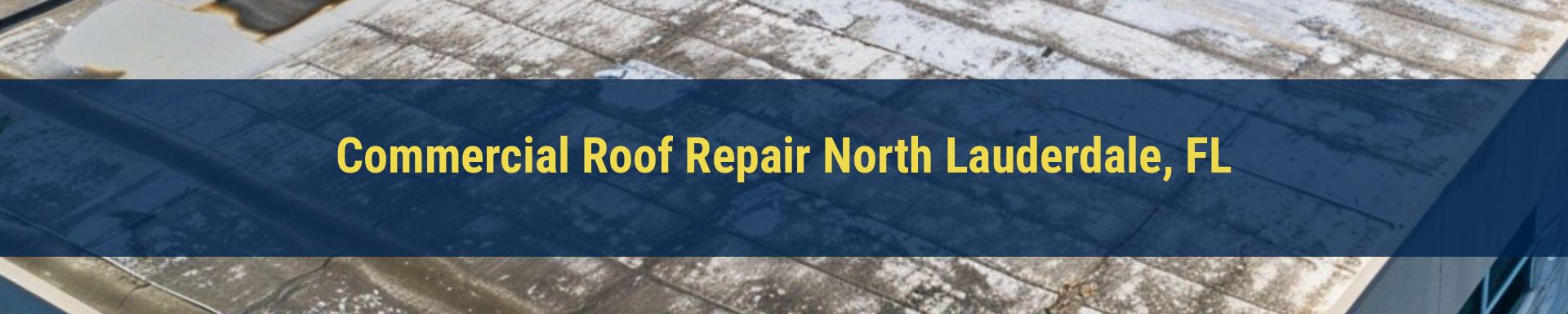
Commercial Roofing Pompano Beach delivers system-led commercial roof repair in North Lauderdale, Florida by confirming active roof defects, identifying the component responsible for water entry, repairing damaged waterproofing areas, and stabilizing vulnerable roof details before a limited defect becomes wet insulation, recurring tenant complaints, interior finish damage, storm-season exposure, operational disruption, or avoidable replacement planning. Commercial Roofing Pompano Beach repairs commercial roof systems on retail plazas along McNab Road, State Road 7 / US-441 commercial buildings, medical offices, professional suites, restaurants, multifamily properties, civic buildings, service businesses, mixed-use assets, light commercial units, and other flat or low-slope commercial roofs affected by western Broward County rainfall, canal-adjacent moisture, humid South Florida heat, hurricane-season uplift pressure, wind-driven rain, rooftop HVAC traffic, dense tenant use, ageing roof assemblies, drainage restriction, seam movement, flashing fatigue, penetration wear, edge-metal stress, ponding recurrence, coating decline, and repeated maintenance access.
The North Lauderdale-specific repair outcomes below show how commercial roof repair is converted into water-entry confirmation, defect isolation, membrane-field correction, seam repair, flashing and penetration recovery, drainage restoration, rooftop equipment-area repair, storm-damage stabilization, substrate review, and documented closeout across McNab Road commercial properties, US-441 corridor buildings, canal-influenced roof environments, multifamily-adjacent roof sections, neighborhood retail plazas, civic and service buildings, rooftop access paths, heavy-rain drainage routes, humid low-slope assemblies, and western Broward storm-season roof exposure.
- Water-entry confirmation for North Lauderdale commercial roofs → ceiling stains, active drips, damp ceiling tiles, tenant reports, retail-unit leak complaints, medical-office moisture concerns, restaurant water-entry issues, multifamily roof symptoms, storm-related intrusion, roof-edge staining, and rooftop equipment-area leaks are traced through the roof assembly to split membrane sections, open laps, failed flashing returns, compromised penetrations, restricted drains, damaged scuppers, wall-transition gaps, saturated insulation pockets, perimeter weaknesses, or deck-level moisture paths → commercial roof repair is directed at the verified leak route rather than the nearest visible stain, a quick patch, or a symptom-only sealant application.
- Membrane-field and seam repair for North Lauderdale commercial roofs → TPO, PVC, EPDM, modified bitumen, built-up roofing, coated roof surfaces, welded laps, adhered seams, previous patch areas, roof-edge terminations, expansion zones, walkway routes, equipment-adjacent membrane sections, ponding-prone fields, canal-moisture-exposed zones, and ageing low-slope roof areas are repaired where UV load, trapped moisture, punctures, blistering, shrinkage, lap separation, uplift pressure, rooftop traffic, drainage backup, or humidity-driven fatigue has interrupted waterproofing continuity → localized repair restores the damaged membrane area before moisture spreads into insulation, decking, tenant spaces, retail interiors, or adjoining roof sections.
- Flashing, penetration, and transition repair in North Lauderdale → parapet returns, curb flashings, wall transitions, vents, skylight perimeters, service entries, HVAC penetrations, pipe supports, conduit runs, drain bowls, scupper openings, perimeter corners, restaurant exhaust areas, civic roof access points, multifamily transitions, and rooftop equipment curbs are corrected where ageing sealant, thermal movement, vibration, canal-area moisture, wind-driven rain, maintenance traffic, or hurricane-season pressure has opened a water-entry point → repair re-secures the interface details where North Lauderdale commercial roofs are most likely to fail during western Broward storm cycles and routine rooftop service use.
- Drainage and ponding repair for North Lauderdale low-slope roofs → obstructed drains, cracked scuppers, clogged gutters, displaced strainers, slow downspouts, leaf debris, parapet-side water paths, low-slope runoff bottlenecks, ponding membrane fields, equipment-area drainage shadows, retail-plaza discharge points, canal-adjacent moisture zones, and ageing drainage assemblies are corrected where rainfall, debris, slope limitations, or poor water movement has left water sitting on the roof surface → repair reduces recurring saturation, membrane fatigue, wet insulation risk, interior staining, and repeat leak behaviour after heavy Broward County rain.
- Storm, wind, and rooftop equipment repair in North Lauderdale → lifted laps, loose edge metal, displaced flashing, punctured membrane, coating loss, stressed fasteners, equipment-curb leaks, vibration-worn penetrations, walkway abrasion, HVAC service-route damage, wind-stressed perimeter areas, debris-impact marks, and service-traffic wear are repaired after thunderstorm activity, hurricane-season rainfall, wind uplift, rooftop maintenance traffic, or mechanical equipment movement → damaged roof zones are stabilized while preserving serviceable roof areas when targeted repair remains technically appropriate.
- Commercial roof repair documentation and closeout for North Lauderdale buildings → leak-source findings, defect locations, photo records, repaired membrane areas, seam corrections, flashing work, penetration repairs, drainage improvements, equipment-zone repairs, ponding observations, substrate notes, moisture concerns, storm-related damage, warranty-relevant conditions, remaining roof risks, and future repair priorities are documented for owners, property managers, facility teams, insurers, tenants, retail operators, civic stakeholders, multifamily managers, restaurant owners, and capital-planning records → repair closeout supports insurance review, warranty evaluation, maintenance planning, storm preparation, budget control, and long-term commercial roof management.
What Commercial Roof Repair Services Do We Provide In North Lauderdale, FL?
Commercial Roofing Pompano Beach delivers system-led commercial roof repair across Pompano Beach and the surrounding Broward County commercial roofing area by identifying, isolating, documenting, and correcting active roof defects before water entry spreads into saturated insulation, tenant disruption, interior damage, storm-damage escalation, emergency repair cycles, or premature roof replacement. Commercial Roofing Pompano Beach repairs commercial roofs on retail centers, office properties, medical buildings, multifamily structures, hospitality assets, restaurants, warehouse units, light industrial buildings, service facilities, mixed-use properties, marina-adjacent buildings, Federal Highway commercial sites, Atlantic Boulevard business properties, Cypress Creek-area commercial assets, and nearby commercial buildings across Deerfield Beach, Lighthouse Point, Lauderdale-by-the-Sea, Fort Lauderdale, Oakland Park, Wilton Manors, Margate, Coconut Creek, Coral Springs, Tamarac, North Lauderdale, and Lauderdale Lakes.
Commercial roof repair in this Broward County service area is shaped by Atlantic salt air, Intracoastal and canal moisture, hurricane-season uplift, wind-driven rain, South Florida UV exposure, humid heat, rooftop mechanical density, corrosion-prone metal details, heavy rainfall, drainage sensitivity, occupied-property constraints, and repeated service access. These conditions can turn small membrane openings, seam movement, flashing separation, rooftop equipment leaks, drainage backup, edge-metal movement, storm displacement, or wet insulation into recurring commercial roof failure if the repair is based only on the visible ceiling stain or the easiest surface patch.
- Commercial roof leak detection and leak repair → ceiling stains, active drips, tenant reports, damp insulation indicators, roof-edge staining, storm-related water entry, equipment-curb moisture, and recurring interior marks are traced back to membrane splits, open seams, failed flashing returns, penetration defects, drainage backup, saturated roof layers, roof-edge openings, or rooftop equipment interfaces → commercial roof repair targets the confirmed water-entry route instead of masking the most visible symptom.
- Membrane, seam, and flat roof repair → TPO, PVC, EPDM, modified bitumen, built-up roofing, coated roof surfaces, welded laps, adhered seams, expansion joints, punctured membrane fields, blistered areas, surface splits, ponding-damaged zones, and low-slope roof sections are repaired where UV exposure, humidity, uplift pressure, storm debris, rooftop traffic, or standing water has broken waterproofing continuity → repair restores localized roof performance before moisture spreads into insulation, decking, occupied interiors, or adjacent roof sections.
- Flashing, penetration, edge, and parapet repair → parapet flashings, curb flashings, coping, edge metal, wall transitions, pipe penetrations, vents, skylights, service entries, HVAC bases, conduit runs, scuppers, drains, roof-to-wall details, and termination points are corrected where wind-driven rain, building movement, ageing sealant, salt-air exposure, uplift stress, or rooftop service traffic has opened leak-prone interfaces → repair strengthens the roof details most likely to create repeat water entry during Broward County storm cycles.
- Drainage-related commercial roof repair → blocked drains, cracked scuppers, misaligned gutters, slow downspouts, displaced strainers, undersized discharge routes, ponding-prone roof sections, parapet-side water paths, equipment-shadowed runoff zones, sand or salt residue, and tree-debris collection areas are corrected where heavy rainfall has kept water on the roof too long → repair reduces membrane fatigue, wet insulation risk, interior staining, corrosion around metal details, and recurring leak behaviour.
- Rooftop equipment and service-zone repair → HVAC curbs, condenser areas, pipe supports, conduit runs, exhaust points, service platforms, walk pads, equipment supports, vibration-prone penetrations, restaurant exhaust zones, marina-service roof routes, and technician access paths are repaired where vibration, compression, poor detailing, displaced supports, grease exposure, foot traffic, or repeated maintenance movement has damaged membrane or flashing continuity → repair protects the roof areas most exposed to operational wear.
- Storm damage and emergency commercial roof repair → lifted laps, torn membrane, loosened edge metal, displaced flashing, open terminations, debris impact, fastener stress, drainage overflow, storm-driven water intrusion, exposed roof openings, and interior-threatening leak conditions are stabilized after hurricane-season weather, severe thunderstorms, or wind-driven rain events → emergency repair reduces immediate building disruption while permanent corrective scope is confirmed and documented.
- Metal roof, coating, and corrosion-sensitive repair → loose fasteners, backed-out screws, panel movement, failed sealant lines, open laps, coating breaks, chalking, edge separation, corroded metal details, gutter joints, scupper metal, penetrations, and expansion joints are corrected where salt air, storm rainfall, heat movement, rooftop traffic, or long-term material fatigue has weakened roof protection → repair prevents metal-detail deterioration or coating failure from becoming uncontrolled water entry.
- Substrate, wet insulation, and repair documentation → localized wet insulation, soft spots, deck staining, compressed insulation, trapped moisture, substrate irregularities, storm-related damage, repaired membrane areas, flashing corrections, drainage repairs, equipment-zone work, photo evidence, remaining roof risks, and next-step recommendations are verified and recorded → documentation shows whether the roof condition is isolated and repairable, requires additional leak detection, should move toward restoration or coatings, or has reached commercial roof replacement planning.
For commercial properties throughout the Pompano Beach and Broward County service area, the correct repair approach depends on whether the defect is isolated, moisture has migrated below the surface, drainage is contributing to failure, rooftop equipment has damaged the assembly, storm exposure has compromised the perimeter, corrosion is weakening metal details, or the wider roof system has moved beyond repair. Commercial Roofing Pompano Beach evaluates each repair through roof condition, building use, occupancy risk, drainage performance, storm exposure, equipment layout, substrate integrity, corrosion risk, warranty context, and lifecycle value, giving owners and property managers a corrective strategy built around long-term roof performance rather than short-term patching.
Have a question about a commercial roof repair project?
Which North Lauderdale Roof Problems Does Commercial Roof Repair Correct?
Commercial roof repair in North Lauderdale corrects defined failures affecting membranes, seams, flashing systems, penetrations, drains, scuppers, perimeter details, rooftop equipment interfaces, coatings, insulation, cover boards, and localized substrates. These problems commonly affect McNab Road shopping plazas, State Road 7 / US-441 commercial properties, medical and professional offices, restaurants, civic buildings, mixed-use assets, multifamily-adjacent sites, neighborhood service businesses, and other compact flat or low-slope roofs exposed to western Broward rainfall, canal-influenced moisture, humid heat, ageing roof layers, shared tenant occupancy, short drainage paths, concentrated HVAC equipment, repeated technician access, ponding pressure, and hurricane-season wind.
The North Lauderdale roof problems below show how Commercial Roofing Pompano Beach converts a verified defect into a defined repair action and a controlled waterproofing, drainage, attachment, or substrate outcome.
- Leaks affecting one or several tenant areas → ceiling stains, active drips, damp finishes, tenant complaints, restaurant water entry, medical-office moisture, civic-building symptoms, or leakage appearing across adjoining units are traced through seams, flashings, drains, scuppers, curbs, parapets, insulation, and deck pathways → the confirmed ingress route is opened, prepared, repaired, reinforced, and resealed → water entry is stopped at the roof-side source rather than treated through disconnected interior or surface patches.
- Punctured, split, or blistered membrane sections → TPO, PVC, EPDM, modified bitumen, built-up roofing, or coated surfaces contain cuts, punctures, cracks, blisters, impact damage, exposed reinforcement, abrasion, or service-traffic wear → unstable roofing is removed and the affected area is patched, welded, bonded, reinforced, or locally replaced → waterproofing continuity is restored across the damaged membrane zone.
- Open seams, lifted laps, and failed patch boundaries → heat cycling, membrane shrinkage, uplift pressure, retained water, technician traffic, or previous repair movement has separated welded seams, adhered laps, asphaltic joints, terminations, or patch edges → failed material is cut back and the joint is rewelded, rebonded, reinforced, or reconstructed → the seam no longer functions as a recurring moisture path.
- Cracked or incompatible previous roof repairs → raised patch edges, brittle asphaltic material, loose reinforcement, incompatible sealants, coating separation, or overlapping repair layers are trapping water or reopening around an older defect → failed repair materials are removed and replaced with compatible membrane, reinforcement, flashing, or coating components → the roof receives one integrated correction instead of another patch over unstable work.
- Failed flashing at shared roof transitions → ageing sealant, movement, vibration, drainage backup, or wind-driven rain has opened parapet returns, demising-wall junctions, roof-to-wall details, equipment curbs, service entries, vents, pipes, conduits, drains, scuppers, or roof edges → the affected interface is stripped back and rebuilt with compatible flashing and secure terminations → rainfall is redirected over the roof instead of into adjoining tenant zones or behind the waterproofing assembly.
- Blocked, cracked, or underperforming drainage components → drains, scuppers, strainers, gutters, downspouts, overflow routes, and parapet channels are obstructed, displaced, damaged, or unable to clear heavy western Broward rainfall → outlets are cleared, repaired, reset, resealed, or locally rebuilt with adjoining membrane corrections → stormwater can leave the roof without backing up against seams, curbs, flashings, or shared occupied spaces.
- Persistent ponding across compact low-slope roof areas → water collects beside compressed insulation, settled sections, raised patch edges, equipment supports, weak scuppers, damaged drain details, or obstructed runoff paths → localized insulation build-up, outlet relationships, roof-profile defects, or flow routes are corrected → standing water and repeated moisture loading are reduced within the affected area.
- Canal-influenced dampness around roof details → slow drying, recurring moisture, coating decline, corrosion staining, sealant fatigue, or organic buildup develops around one perimeter, drain, scupper, shaded equipment zone, or low point → the affected membrane, flashing, metalwork, drainage detail, or insulation is repaired and protected → prolonged dampness no longer accelerates deterioration within the local roof zone.
- HVAC curb and rooftop equipment leakage → vibration, shifted supports, loose curb flashing, cracked penetration seals, membrane abrasion, displaced walk pads, or equipment-shadowed drainage damages one mechanical area → curbs, penetrations, supports, adjoining membrane, and runoff details are repaired together → equipment operation no longer repeatedly opens the surrounding waterproofing.
- Restaurant exhaust and service-zone deterioration → grease residue, exhaust heat, coating softening, membrane staining, curb wear, contaminated runoff, and repeated servicing damage roofing around kitchen or mechanical equipment → affected materials are cleaned or removed, compatible roofing is installed, flashings are rebuilt, and access protection is added → the operational roof zone is returned to a stable waterproofing condition.
- Technician traffic damage along narrow access routes → movement between roof access points, HVAC units, drains, exhaust systems, and service platforms displaces walk pads, abrades membrane, compresses insulation, loosens supports, or reopens prior repairs → damaged materials are corrected and permanent walkway or protection measures are installed → the service path no longer acts as a recurring puncture, compression, or leak corridor.
- Loose coping, edge metal, and perimeter attachments → wind pressure, fastener fatigue, thermal movement, corrosion, or previous repair failure has loosened coping joints, termination bars, edge metal, membrane perimeters, or parapet details → affected components are realigned, refastened, reinforced, resealed, or replaced → perimeter waterproofing and uplift resistance are restored across the repaired section.
- Localized metal roof and fastener leakage → panel laps, screws, closures, sealant joints, penetrations, gutter connections, or expansion details have loosened, backed out, separated, or corroded → panels are realigned, fasteners replaced, closures restored, joints resealed, and corrosion treated → secure attachment and controlled water shedding are re-established.
- Storm-damaged membrane, flashing, and edge details → thunderstorms or hurricane-season wind lift laps, puncture membrane, displace flashing, loosen edge metal, stress fasteners, damage coatings, move supports, or expose roof openings → affected components are stabilized, repaired, reinforced, or replaced within the damaged zone → storm-created vulnerabilities are closed without leaving exposed weak points.
- Localized coating breakdown over a viable roof surface → peeling, blistering, chalking, cracking, thinning, contamination, ponding wear, or edge separation has exposed otherwise stable membrane or metalwork → failed coating is removed, underlying defects are repaired, the surface is prepared, and compatible coating is reinstated → weathering protection is restored across the treated roof area.
- Contained wet insulation beneath a verified defect → moisture is limited below one seam, puncture, curb, flashing, drain, scupper, patch edge, or membrane opening → the roof is opened locally, saturated insulation is removed, the substrate is inspected, and dry replacement materials are installed → concealed moisture is eliminated before the waterproofing surface is closed.
- Soft cover boards or localized substrate deterioration → compression, staining, fastener movement, surface irregularity, or limited moisture damage has weakened support beneath one roof area → defective cover board or substrate material is exposed, dried, repaired, reinforced, or replaced → the reinstated membrane receives a stable and securely attachable base.
- Cross-unit leakage beneath shared roof sections → several shops, offices, restaurants, medical suites, civic areas, or mixed-use spaces experience related moisture because water is travelling beneath the membrane, through shared insulation, along deck joints, or between drainage and flashing defects → Commercial Roofing Pompano Beach maps the connected pathway and coordinates membrane, flashing, drainage, insulation, and substrate repairs → the shared failure route is corrected as one roof-system problem rather than treated unit by unit.
- Recurring defects caused by unresolved operational pressure → a repaired seam, curb, patch, drain, or flashing repeatedly fails because vibration, foot traffic, displaced supports, exhaust exposure, ponding, or drainage pressure remains active → the roof defect and the condition causing recurrence are corrected within the same repair scope → the completed work is protected from the mechanism that caused earlier repairs to reopen.
- Multiple disconnected repairs that no longer perform as one system → accumulated patches, sealants, coatings, edge repairs, and drainage corrections have created uneven transitions, concealed moisture paths, or incompatible material interfaces → failed and conflicting materials are removed and the affected zone is rebuilt as a coordinated membrane, flashing, drainage, and perimeter detail → the roof receives one system-led correction rather than another isolated surface treatment.
Commercial Roofing Pompano Beach defines North Lauderdale repair scope through confirmed leak pathways, membrane and seam condition, previous repair compatibility, flashing continuity, drain and scupper performance, canal-related moisture, ponding distribution, rooftop HVAC configuration, restaurant and service-zone exposure, technician traffic, perimeter attachment, metal-roof detailing, moisture extent, insulation condition, substrate response, storm damage, shared occupancy impact, warranty context, and remaining roof service life. The completed repair resolves the identified roof problem, restores the affected component, and protects adjoining serviceable roof areas and occupied spaces from continued deterioration.
Have a question about a commercial roof repair project?
Which North Lauderdale Roof Defects Can Be Contained Before They Affect The Wider Assembly?
Commercial roof repair remains appropriate in North Lauderdale when investigation confirms that the defect is contained, the moisture route can be isolated, and the surrounding membrane, insulation, drainage system, flashing network, perimeter attachment, substrate, and deck remain serviceable. This repair pathway can apply to McNab Road shopping plazas, State Road 7 / US-441 service properties, medical and professional offices, restaurants, civic buildings, mixed-use assets, multifamily-adjacent sites, and neighborhood commercial properties exposed to western Broward rainfall, canal-influenced humidity, intense heat, hurricane-season wind pressure, compact runoff routes, concentrated rooftop HVAC equipment, frequent technician traffic, shared tenant occupancy, ageing roof materials, and repeated patch history.
The North Lauderdale roof defects below can generally be corrected through targeted commercial roof repair when verified evidence shows that deterioration has not spread through shared insulation, connected roof sections, multiple tenant zones, or the supporting roof build-up.
- A verified leak source affecting one defined roof or tenant area → ceiling stains, active drips, damp finishes, tenant complaints, restaurant leakage, medical-suite moisture, civic-building water entry, or equipment-area symptoms are traced to one membrane opening, seam, flashing return, curb, penetration, drain connection, scupper, parapet joint, or roof edge → commercial roof repair corrects the proven source before moisture travels into adjoining units or shared insulation.
- Localized membrane punctures, splits, or surface wear → TPO, PVC, EPDM, modified bitumen, built-up roofing, or coated membrane contains isolated cuts, punctures, blistering, abrasion, impact damage, or service-traffic wear while surrounding material remains bonded and dry → the affected section can be prepared, reinforced, patched, or locally replaced without disturbing the wider compact roof field.
- Open seams or laps limited to a mapped section → welded seams, adhered laps, asphaltic joints, patch boundaries, or membrane transitions have opened under heat cycling, uplift pressure, retained water, or rooftop traffic → seam correction restores localized waterproofing where adjoining membrane and attachment remain dependable.
- Patch failure confined to one repair area → raised patch edges, cracked asphaltic material, coating separation, loose reinforcement, or incompatible sealant is limited to a defined section → defective repair material can be removed and replaced where the original membrane, insulation, and substrate remain viable.
- Flashing failure at one shared roof interface → ageing sealant, movement, vibration, or wind-driven rain has opened one parapet, demising-wall junction, curb, roof-to-wall transition, service entry, vent, pipe penetration, conduit detail, drain, scupper, or edge condition → targeted flashing reconstruction prevents one defective interface from distributing water into adjoining occupancies.
- A drainage problem restricted to one compact runoff path → one drain, scupper, strainer, gutter section, downspout, overflow route, or parapet channel is blocked, cracked, displaced, or underperforming → drainage repair restores discharge where the wider roof slope and insulation profile remain functional.
- A contained ponding area with a correctable cause → standing water is linked to one compressed insulation pocket, settled low point, weak scupper, damaged drain detail, equipment support, or obstructed flow route → localized drainage and roof-build-up correction can restore the area without reconstructing the complete roof plane.
- Canal-related moisture affecting one identifiable roof zone → slower drying, coating decline, sealant fatigue, corrosion staining, or recurring dampness is concentrated around one perimeter, drain, scupper, or shaded equipment area → targeted repair can correct the affected membrane, flashing, metalwork, or insulation where moisture has not spread through the wider assembly.
- HVAC damage isolated to one mechanical grouping → one curb, condenser area, pipe support, conduit entry, platform, penetration, walk path, or vibration-sensitive detail has failed while adjoining equipment zones remain stable → equipment-area repair restores waterproofing, support, and runoff before movement enlarges the defect.
- Service-route wear limited to a defined access path → repeated technician movement has displaced walk pads, compressed a small insulation area, abraded membrane, worn coatings, loosened supports, or damaged previous patches between roof access and equipment → targeted repair and improved traffic protection prevent operational wear from spreading.
- Contained storm or uplift damage → severe weather has lifted one lap, loosened limited coping or edge metal, displaced a flashing, stressed specific fasteners, punctured a small membrane section, or damaged one equipment interface → storm damage repair remains appropriate when surrounding attachment, insulation, and waterproofing remain serviceable.
- Localized coating deterioration over a stable roof surface → peeling, blistering, cracking, chalking, thin coverage, ponding wear, or edge separation is present over a limited area without extensive moisture or substrate instability → preparation, underlying defect correction, and coating reinstatement can restore protection without full replacement.
- Minor edge-metal, scupper, or fastener deterioration → limited coping joints, termination bars, scupper metal, gutter sections, flashing components, or fasteners show loosening, isolated corrosion, movement, or sealant decline → component-level correction restores securement where deterioration has not spread through the wider perimeter network.
- A mapped wet-insulation pocket beneath one defect → moisture is confined below one seam, puncture, curb, flashing, drain, scupper, patch edge, or membrane opening and adjoining insulation remains dry → the roof can be opened locally, compromised insulation removed, the substrate verified, and compatible waterproofing reinstated.
- A repair-level defect that routine maintenance cannot resolve → active leakage, an open seam, failed flashing, damaged drainage component, punctured membrane, deteriorated patch, curb leak, loose edge metal, coating breach, or limited storm displacement requires corrective construction rather than cleaning or monitoring → targeted repair prevents a contained defect from becoming cross-unit leakage, widespread saturation, or replacement risk.
Commercial Roofing Pompano Beach determines whether a North Lauderdale commercial roof defect remains repairable through leak-source tracing, shared occupancy patterns, membrane and seam condition, patch compatibility, flashing continuity, drainage performance, canal-related moisture, insulation response, rooftop equipment behaviour, perimeter securement, substrate condition, storm exposure, warranty requirements, and remaining service life. Repair is appropriate when the damaged area can be isolated and corrected without leaving concealed deterioration within shared roof sections or adjoining tenant zones.
What Roof Conditions Should Prompt North Lauderdale Property Owners To Request Repair?
North Lauderdale property owners should request commercial roof repair when leakage, patch deterioration, drainage changes, equipment-zone wear, perimeter movement, or storm exposure indicates that a defect is active but may still be contained. Prompt investigation is particularly important for compact shopping plazas, medical and professional offices, restaurants, civic properties, mixed-use buildings, service businesses, and multifamily-adjacent sites where one roof opening can distribute moisture through shared insulation and affect several occupancies beneath the same low-slope assembly.
- Interior moisture appears during or after rainfall → ceiling stains, active drips, damp tiles, discoloured finishes, musty odours, wet walls, tenant complaints, restaurant leakage, medical-office moisture, or equipment-area symptoms become visible → request commercial roof leak detection before water migrates through shared insulation or reaches adjoining units.
- A previous repair begins leaking again → water returns beside a patched seam, corrected curb, resealed penetration, restored flashing, repaired drain, scupper, or edge detail → request renewed investigation because the original opening, an adjoining defect, or a concealed moisture route may remain active.
- Visible membrane or patch deterioration develops → punctures, splits, blistering, open laps, lifted seams, cracking, abrasion, loose patch edges, exposed reinforcement, or surface separation appears → request repair while the damaged section remains distinguishable from the wider roof field.
- Flashing or sealant opens around a shared transition → gaps, wrinkles, cracked sealant, detached flashing, loose counterflashing, or movement is visible around parapets, tenant divisions, curbs, walls, vents, service entries, pipes, conduits, drains, scuppers, or roof edges → request repair before water moves laterally into several occupied areas.
- Compact drains or scuppers no longer discharge rainfall normally → slow drains, backed-up scuppers, displaced strainers, gutter overflow, weak downspouts, blocked overflows, or debris-filled parapet channels become visible during storms → request drainage repair before standing water stresses seams, flashings, insulation, and patch boundaries.
- Ponding remains after the expected drying period → water persists beside parapets, behind equipment, around drains, near scuppers, or across compact low areas → request assessment to determine whether blockage, insulation compression, localized settlement, equipment interference, or wider drainage deformation is responsible.
- Canal-influenced moisture symptoms keep returning → roof areas remain damp, coatings deteriorate, sealants fatigue, corrosion staining develops, or moisture reappears around perimeter and drainage details → request repair assessment before prolonged dampness spreads into insulation or supporting materials.
- Rooftop HVAC areas show active deterioration → curb leakage, cracked sealant, loose flashing, shifted supports, punctures, worn walk pads, membrane abrasion, coating loss, vibration damage, or blocked runoff appears around equipment → request equipment-zone repair before servicing and movement enlarge the affected area.
- Repeated technician routes are damaging the roof → walk pads move, membrane surfaces wear, patches reopen, supports shift, coatings abrade, or insulation compresses between access points and equipment → request targeted repair and traffic protection before the service path becomes a recurring leak route.
- Roof-edge or parapet components have moved → coping, edge metal, termination bars, fasteners, membrane perimeters, or parapet details show lifting, looseness, open joints, gaps, or storm-related displacement → request prompt repair because perimeter weakness can admit wind-driven rain and reduce uplift resistance.
- Severe weather has visibly altered the roof → lifted laps, punctures, debris impacts, displaced flashing, loose fasteners, membrane movement, drainage overflow, edge damage, or equipment-zone displacement appears after a storm → request storm damage assessment even where interior leakage has not yet become visible.
- Protective coating begins failing in defined areas → peeling, blistering, chalking, cracking, exposed seams, thin coverage, ponding wear, contamination, or edge separation develops → request assessment to verify membrane condition, substrate dryness, adhesion, and whether recoating remains technically suitable.
- The roof feels soft, compressed, or unstable → localized softness, movement, fastener withdrawal, cover-board damage, substrate irregularity, or compression is detected during inspection or equipment servicing → request targeted opening and moisture investigation before the area is patched or coated.
- Several tenant units report related moisture symptoms → ceiling staining, dripping, odours, damp finishes, or recurring leak complaints appear across adjoining shops, offices, restaurants, medical suites, civic areas, or mixed-use spaces after the same weather event → request coordinated leak tracing because water may be travelling through shared insulation, deck joints, or roof transitions.
- Roof defects begin interrupting active property use → retail trading, restaurant service, medical appointments, office occupancy, civic activity, resident circulation, customer access, parking, or rooftop servicing is affected by leakage, interior protection, odour, ceiling damage, or restricted areas → request repair before a contained roof defect creates wider operational disruption.
- Several symptoms are developing within one roof zone → ponding, patch failure, seam movement, coating decline, flashing fatigue, equipment wear, substrate softness, and interior staining occur together near one drainage, perimeter, or mechanical area → request one coordinated commercial roof repair assessment rather than arranging disconnected symptom-level services.
Commercial Roofing Pompano Beach assesses North Lauderdale repair requests through verified leak pathways, shared occupancy patterns, membrane and seam condition, repair-layer compatibility, flashing performance, drain and scupper behaviour, ponding distribution, canal-related moisture, rooftop HVAC configuration, service-route wear, perimeter attachment, moisture extent, insulation condition, substrate response, storm-damage evidence, photo documentation, warranty context, and remaining roof service life. The corrective scope may include commercial roof leak detection, membrane patching, seam restoration, flashing reconstruction, drainage repair, localized ponding correction, equipment-curb work, service-route protection, edge-metal securement, coating reinstatement, targeted insulation replacement, substrate repair, or storm-damage stabilization.
Have a question about a commercial roof repair project?
When Does A North Lauderdale Commercial Roof Need Localized Repair?
A North Lauderdale commercial roof needs targeted repair when the wider assembly remains viable but one identifiable failure is disrupting waterproofing, drainage, perimeter security, or a rooftop equipment interface. McNab Road shopping plazas, State Road 7 / US-441 service properties, medical and professional offices, restaurants, civic buildings, mixed-use assets, multifamily-adjacent sites, and other compact low-slope properties often place several occupied units beneath a shared roof field. Western Broward rainfall, canal-influenced moisture, humid heat, concentrated HVAC equipment, short runoff paths, technician traffic, seam movement, and hurricane-season wind pressure can create a localized defect that sends water into more than one tenant area without meaning the complete roof has failed.
The repair decision depends on whether the defect boundary can be verified. Leakage traced to one separated lap, punctured membrane section, failed curb flashing, cracked scupper, obstructed drain, loose edge detail, coating break, storm-damaged transition, or limited wet-insulation area may be corrected while surrounding membrane fields, attachment, substrate, and insulation remain serviceable. Because compact North Lauderdale roofs can move water between adjoining units, Commercial Roofing Pompano Beach checks whether moisture has travelled beneath the membrane, followed a roof-to-wall transition, collected behind mechanical equipment, or been redirected by ponding before treating the visible interior stain.
Corrective work is selected from leak-source evidence, membrane and seam condition, flashing continuity, drain and scupper performance, HVAC-curb detailing, moisture extent, canal-related exposure, substrate firmness, perimeter attachment, storm damage, tenant-access requirements, warranty conditions, and remaining roof life. The resulting scope may include commercial roof leak detection, membrane repair, seam correction, flashing reconstruction, drainage work, equipment-curb repair, edge-metal stabilization, coating reinstatement, localized insulation replacement, or storm-damage correction. Repair should be requested while the failure remains bounded, before recurring water entry spreads between tenant spaces, saturates the shared roof build-up, disrupts business operations, or moves an otherwise serviceable North Lauderdale roof into restoration or replacement planning.